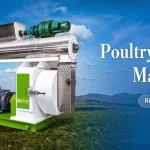
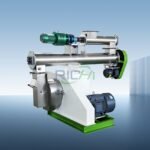
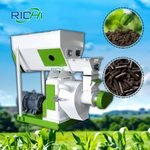

When planning an animal feed production project, equipment cost is naturally one of the first questions buyers ask. However, comparing machines only by their purchase price can lead to an incomplete evaluation. Two pellet mills with similar appearances may have very different capacities, drive systems, materials, auxiliary equipment, automation levels, and expected operating conditions.
The animal feed pellet machine price is usually influenced by several interconnected factors. Production capacity is one of the most obvious. A machine designed for a small farm will generally have a very different configuration from equipment intended for a large commercial feed mill. The raw materials and feed formulas can also influence the required configuration.
Capacity Is More Than a Number
A feed producer should begin with the amount of feed that needs to be manufactured rather than choosing a machine model first. If a farm consumes a few hundred kilograms of feed per hour, purchasing equipment designed for several times that output may not be economical.
On the other hand, a commercial producer needs enough capacity to meet customer demand without excessive downtime. A livestock feed pellet mill for sale should therefore be evaluated according to the complete production requirement, including daily operating hours and expected future demand.
For example, a producer planning to operate several shifts each day may benefit from a more robust continuous production system. A smaller farm may place greater importance on simple operation, moderate investment, and easy maintenance.
The Role of Raw Materials
Feed formulas can contain corn, wheat bran, soybean meal, forage, alfalfa, premix, and other ingredients. These materials do not all behave in the same way during pelleting.
Grain-based formulas may have different grinding and conditioning requirements from formulas containing a higher proportion of forage. Fibrous materials can also affect feeding performance. This means the machine should be selected after the raw material formula has been evaluated.
A good supplier will normally want to understand the raw materials before recommending a model. This helps prevent situations where a machine is technically capable of producing pellets but does not perform efficiently with the customer’s actual formula.
Ring Die Configuration
The ring die is one of the important components in a feed pellet mill. Die hole diameter influences the final pellet size, while die material and manufacturing quality affect service life and production stability.
A producer that manufactures several types of feed may require different dies or a configuration that allows practical product changes. The cost of dies should therefore be considered as part of long-term production planning rather than treated as an isolated accessory expense.
Automation and Auxiliary Equipment
Automation can also influence equipment investment. A basic system may require more manual intervention, while an automated production line can coordinate feeding, grinding, mixing, pelleting, cooling, screening, and packing more efficiently.
However, automation should be selected according to the actual project. A small farm does not necessarily need the same control architecture as a large feed factory. The objective should be to achieve the required level of process control without adding unnecessary complexity.
Auxiliary equipment is another major consideration. A pellet mill cannot replace a crusher, mixer, cooler, or packing system when the project requires a complete feed production process. If these machines are needed, their costs should be included in the overall investment calculation.
Looking at Long-Term Value
The cheapest machine is not always the lowest-cost solution over its entire service life. Maintenance frequency, spare parts, energy consumption, pellet quality, production stability, and downtime can all influence operating costs.
A machine with a stronger transmission system, reliable bearings, durable die components, and appropriate safety features may have a higher initial price but offer better long-term value.
Buyers can click to read more information about equipment configurations before comparing quotations from different suppliers.
Choosing a Suitable Supplier
A reliable manufacturer should be able to explain why a particular model is recommended. Instead of providing only a price, the supplier should consider capacity, feed type, raw materials, pellet diameter, working hours, and the required production process.
Richi Pellet Machine solutions cover different animal feed applications and can be combined with supporting equipment to create complete production systems. The appropriate configuration depends on each project’s specific requirements.
A Better Way to Compare Quotations
When comparing suppliers, buyers should ask whether quotations include feeders, conditioners, motors, control systems, spare parts, installation support, and other necessary equipment. A low initial quotation may not remain low if important components are excluded.
It is also useful to compare the expected output under similar raw material conditions rather than comparing motor power alone. A machine’s practical value comes from its ability to convert prepared feed material into consistent pellets at a stable operating rate.
Ultimately, equipment investment should be viewed as a production decision rather than a simple purchasing decision. Understanding capacity, raw materials, automation, auxiliary equipment, maintenance, and future demand makes it easier to select a pelletizing system that provides dependable value over the long term.
view details: https://www.richimanufacture.com/animal-feed-pellet-machine-for-sale/