


A serious pellet equipment quotation should be the result of technical clarification, not the beginning of it. When a supplier asks only for capacity and immediately sends a complete-line price, many important design assumptions are hidden inside that number. A professional supplier should ask enough questions to understand the raw material, finished product, operating schedule, site, utilities, storage, packaging, automation, and project scope before presenting a quotation that the buyer can meaningfully compare.

What Raw Materials Will You Process?
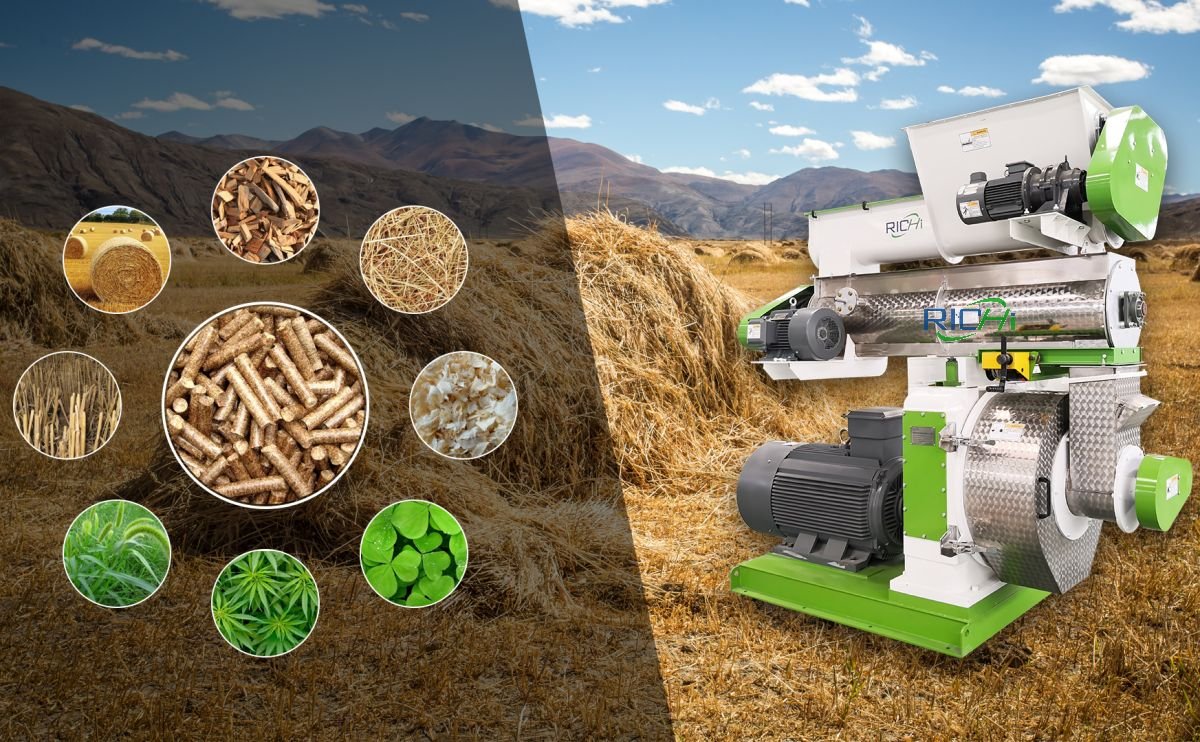
The first question should identify every important raw material. For biomass projects this may include sawdust, wood chips, shavings, bark, straw, or agricultural residues. For feed projects it may include grains, meals, bran, minerals, oils, and premixes. Different materials require different receiving, cleaning, size reduction, drying, mixing, conditioning, and storage arrangements.
The supplier should also ask whether the material composition is stable or changes by season and source. A line designed for one consistent material may not perform the same way with a highly variable blend.
What Is The Moisture Range?
Moisture is critical because it affects drying, grinding, pelleting, cooling, storage, and energy demand. The supplier should ask for measured values where possible and request both typical and maximum moisture. If the raw material is wet, the proposal may need a dryer and fuel system. If it is already dry, those systems may be unnecessary.
A quotation that ignores moisture may be missing one of the largest equipment and energy sections in the project.
What Is The Incoming Particle Size?
Raw-material form determines preparation equipment. Logs, chips, coarse fiber, shavings, powder, and meal cannot be treated as equivalent. The supplier should ask for approximate dimensions, photos, and preferably samples for unusual materials. This information determines whether chippers, crushers, hammer mills, screens, or magnetic separation are required.
It should also ask about contaminants such as stones, metal, sand, or other foreign material that can damage equipment or affect pellet quality.
What Finished Pellets Do You Need?
The supplier should ask about pellet diameter, length, moisture, density, durability, fines, and any applicable market standard. If several pellet sizes or formulas are required, it should ask how much of each product will be produced and how often the plant will change between them.
This information affects ring-die selection, conditioning, cooler sizing, screening, storage, packaging, and changeover planning. A pellet machine cannot be selected correctly without knowing what finished product it must make.
What Is The Final Use?
Pellets for industrial fuel, residential heating, poultry feed, cattle feed, aquaculture, fertilizer, bedding, or other applications can have very different quality and process requirements. The supplier should understand the product’s end use because it influences raw-material preparation, hygiene, additives, pellet size, durability, cooling, and packaging.
Two projects requesting the same diameter and capacity can require different production lines when the final use is different.
What Capacity Do You Need Per Hour And Per Year?
A professional supplier should ask for hourly output and annual production target. It should also ask how many hours per shift, shifts per day, and days per year the factory will operate. This allows it to evaluate machine loading, storage, maintenance windows, labor, utilities, and the value of redundancy.
- Target tons per hour
- Expected annual tonnage
- Hours per shift
- Shifts per day
- Operating days per year
- Seasonal production peaks
A capacity number without operating schedule is incomplete project information.
Where Will The Plant Be Installed?
The supplier should ask for country, city or region, altitude where relevant, ambient temperature, humidity, and local environmental conditions. These factors can affect motors, electrical enclosures, cooling, drying, ventilation, steel structures, dust systems, and outdoor equipment.
Location also affects shipping, installation planning, local standards, and service arrangements. International projects should not be quoted as though every site has the same conditions.
Do You Have An Existing Building?
If the plant must fit inside an existing building, the supplier should request dimensions, clear height, columns, floor levels, doors, pits, access routes, and any equipment that must remain. If the building has not been constructed, it should ask for land dimensions and local height restrictions so a suitable layout can be developed.
Building constraints can change conveyors, bin volumes, steel structure, equipment arrangement, and even the practical capacity of the line.
What Electrical Supply Is Available?
The supplier should confirm voltage, frequency, phase, transformer or service capacity, and any limitations on large-motor starting. This information affects motor selection, control-panel design, variable-frequency drives, and total plant power planning.
If the site has an existing electrical system, the supplier should ask about current loads so it can judge whether additional capacity is required.
What Other Utilities Are Available?
Depending on the process, the plant may need steam, compressed air, water, fuel, hot air, or thermal energy. The supplier should ask whether these utilities already exist, their pressure or capacity where known, and whether they should be included in the quotation.
This is particularly important for feed conditioning and biomass drying, where utility systems can materially change project investment and operating cost.
How Will Raw Materials Arrive?
The supplier should ask whether materials arrive by bulk truck, bag, loader, conveyor, container, or another method. Receiving method influences unloading pits, conveyors, dust collection, storage bins, warehouse space, and labor. It should also ask how many different materials need separate storage.
A production line begins at receiving, not at the pellet mill, so this information belongs in the quotation stage.
How Much Storage Do You Need?
Ask whether the supplier requests raw-material and finished-product storage days. Storage can occupy a large part of the site and investment. It also buffers seasonal supply, truck schedules, production interruptions, and dispatch timing.
If storage is not included in the first quotation, the supplier should clearly state that exclusion rather than allow the buyer to assume the proposal represents a complete factory.
What Packaging Is Required?
Bag weight, bags per hour, big bags, bulk loading, palletizing, labeling, and warehouse handling all affect equipment and layout. The supplier should ask how the finished product will leave the factory and whether several packaging formats are needed.
A line capable of producing pellets faster than they can be packed will not achieve its intended output, so packaging should be considered with the main process.
What Automation Level Do You Expect?
The supplier should ask how much operator intervention is acceptable. Requirements may include central PLC control, automatic batching, recipes, variable-speed control, alarms, production records, remote diagnostics, or integration with an existing system. The answer affects control hardware, software engineering, instrumentation, and commissioning.
“Fully automatic” is too vague. A professional supplier should translate automation into specific functions.
What Is The Scope Of Supply?
The supplier should clarify whether the buyer needs only core machinery or a turnkey package including steel structures, electrical panels, storage, boiler, compressor, packaging, installation, commissioning, and training. It should also identify what the customer will source locally, such as civil construction, transformer, field cables, or cranes.
Scope clarity prevents a low equipment quotation from being mistaken for a complete project cost.
What Future Expansion Is Planned?
A good supplier should ask whether capacity, product range, storage, or automation may expand. Future plans can influence building layout, conveyor sizing, electrical infrastructure, spare bin positions, and reserved space. Not every project should pay for future capacity immediately, but the initial design should avoid blocking reasonable expansion.
This question shows that the supplier is thinking beyond the first machine purchase.
What Is The Project Timeline?
The supplier should ask when land, building, utilities, financing, permits, and raw materials will be ready. Equipment delivery is only one part of the schedule. A realistic quotation should align manufacturing with site preparation rather than promise the shortest possible lead time without context.
It should also identify customer decisions required before production, such as layout approval and electrical confirmation.
A Good Supplier Questionnaire
| Question Area | Why It Matters | Quotation Impact |
|---|---|---|
| Raw material | Defines process route | Preparation equipment |
| Moisture | Determines drying need | Major capital and energy |
| Pellet specification | Defines finishing requirements | Die, cooler, screening |
| Capacity schedule | Defines plant loading | Equipment sizing |
| Site and utilities | Defines interfaces | Layout and electrical design |
| Scope | Defines responsibility | Total project price |
How RICHI Machinery Approaches Early Project Questions
RICHI Machinery develops pellet plant proposals around raw materials, product goals, capacity, site conditions, utilities, and project scope. Buyers can review the company’s broader engineering capabilities through turnkey service planning. With more than 30 years of industry experience and over 2,000 delivered projects, it has worked across varied applications, but each new proposal still depends on accurate customer information.
The same principle applies to any supplier: the better its questions, the more confidence a buyer can have that the quotation reflects the actual project rather than a generic package.
Final Recommendation
Before giving you a serious pellet equipment quotation, a supplier should ask about raw materials, moisture, particle size, finished pellets, end use, hourly and annual capacity, operating schedule, site, building, electrical supply, utilities, receiving, storage, packaging, automation, scope, expansion, and timeline. It should also identify which information remains uncertain.
A long technical questionnaire is not an inconvenience; it is evidence that the supplier is trying to reduce design risk. Be more cautious when a company can price a complete factory immediately without understanding these conditions. Fast quotations can be useful for very early budgets, but a final comparison should be based on proposals developed from the same complete project information.