Two pigs. Same breed. Same age. Same barn. Same feed formulation. But one of them converts feed into gain at a noticeably better rate. The difference isn’t in the ingredients. It’s in the form of the feed.
Feed form matters more than most producers realize. A pig that eats mash and a pig that eats pellets may consume the same weight of feed each day. But the pig on pellets is getting more usable nutrition from that feed. The pelleting process changes the feed physically and chemically, affecting how the pig eats, digests, and utilizes what’s in the feeder.
The difference in feed efficiency between mash and pellets is typically 5% to 10%. For a 1,000-head finishing barn, that can mean thousands of dollars in feed savings over a single turn. The animals that eat pellets reach market weight faster, with less feed consumed per pound of gain. The impact on profitability is real.
The Feeding Behavior
Pigs are not delicate eaters. They consume feed quickly, often without thorough chewing. The feed goes down, enters the stomach, and digestion begins. The physical form of that feed affects how it moves through the digestive tract and how completely the nutrients are extracted.
Mash feed has a higher surface area per unit of volume. This can be an advantage for enzymatic digestion—the enzymes have more surface to work on. But mash also tends to be dusty, which affects feed intake and can lead to respiratory issues in the barn. Pigs waste more mash through spillage. Selective eating is possible with mash, as pigs can pick out the more palatable particles.
Pellets eliminate selective eating. The ingredients are bound together into a uniform particle. Every pellet contains the same nutritional composition. Pigs eat the whole ration, not just the parts they prefer. The denser form reduces spillage. The dust is minimal, improving barn conditions.
The denser form also affects how the feed moves through the digestive system. Pellets stay in the stomach longer, allowing more time for enzymatic breakdown before the material passes into the intestine. The longer retention time can improve digestibility of some nutrients.
The Processing Effect
The pelleting process does more than change the physical form. The steam conditioning and heat of compression gelatinize the starches. Gelatinized starch is more accessible to the pig’s digestive enzymes than raw starch. This improves the energy value of the feed.
The heat also modifies the protein structure. Some proteins become more digestible. Others may be protected from rumen degradation in ruminants, but for pigs, the effect is generally positive. The overall availability of amino acids improves.
The heat has another benefit. It reduces the microbial load in the feed. Pathogens that might be present in the ingredients are partially or completely eliminated during pelleting. This is particularly important for feed ingredients that may carry disease risk.
The conditioning and pelleting process also allows for the inclusion of ingredients that might otherwise be difficult to incorporate into a balanced diet. Fats and oils can be added during or after pelleting. The binding properties of the process hold the ingredients together.
The Production Approach
The production of pig feed pellets follows a sequence of steps. Grinding reduces the grains to the correct particle size. For pigs, the target particle size is typically 500 to 700 microns for growing pigs and somewhat finer for weaners.
The ground ingredients are mixed with the other components—protein meal, minerals, vitamins, and any additives. The mixing must be thorough to ensure that each animal receives a balanced diet.
The mixed material is conditioned with steam. The conditioning temperature and moisture are controlled to prepare the material for pelleting. The conditioning affects the pellet quality and the digestibility of the feed.
The conditioned material is compressed through the die to form the pellets. The pig feed making machine that performs this step must be configured for the specific requirements of pig feed.
The Equipment
A pig feed making machine for pellet production must handle the characteristics of the material. The feed has a moderate fat content, which can affect the binding. The particle size from the grinding step affects the pellet durability.
The die is the key component. The die hole diameter determines the pellet size. For pigs, pellets typically range from 3 to 6 millimeters, depending on the age and size of the animals. The die must be made from wear-resistant material to withstand the abrasive nature of the ground ingredients.
The rollers press the material through the die. The gap between the rollers and the die affects the compression and the pellet quality. The bearings must be sealed against contamination from the feed particles.
The motor must provide sufficient power for the compression. The power requirement depends on the capacity and the characteristics of the material. A machine that’s underpowered will struggle to maintain production; one that’s overpowered will waste energy.
The control system manages the feed rate and the process parameters. In a modern pig feed making machine, the control system monitors temperature, pressure, and motor load, adjusting parameters as needed.
The Scale of Production
The scale of pig feed production varies widely. A small farrow-to-finish operation might produce a few hundred kilograms of feed per day. A large commercial operation might require many tons per day.
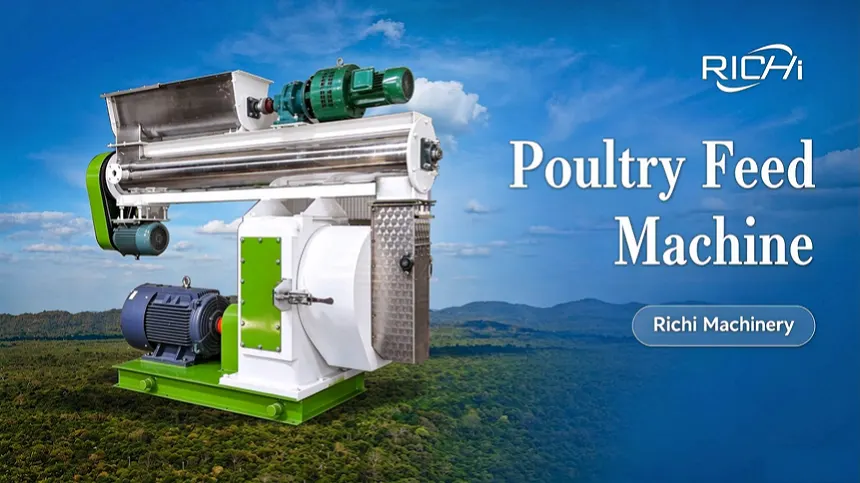
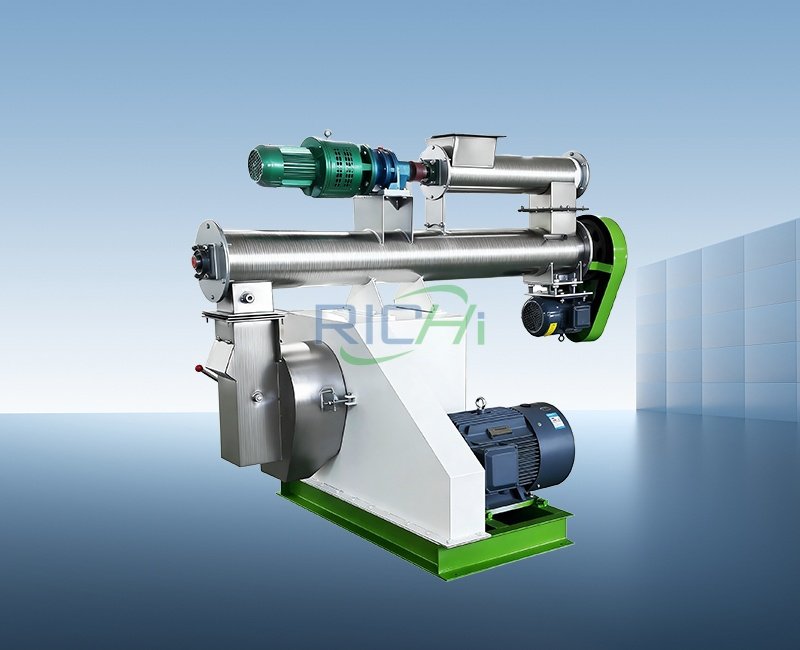
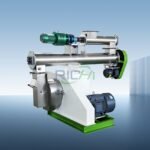
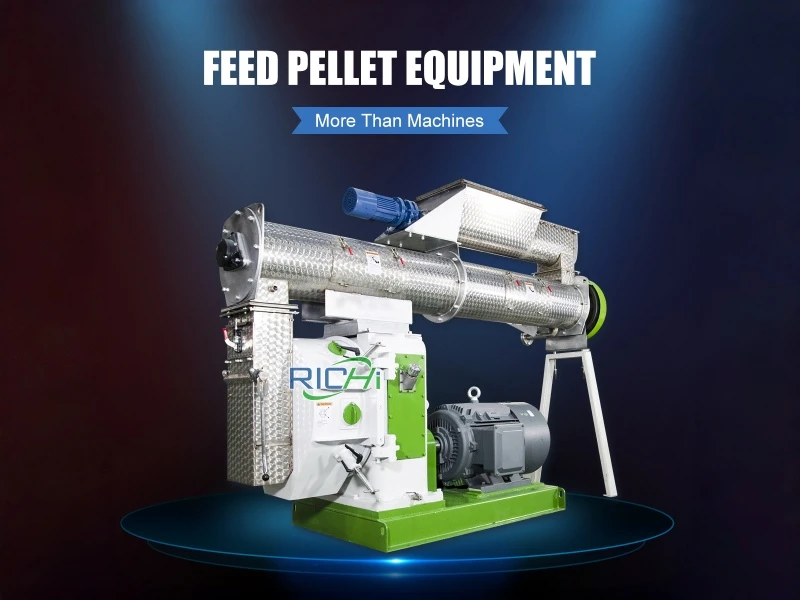
A 1-40T/H industrial feed pellet machine is designed for larger operations. The capacity ranges from 1 to 40 tons per hour, depending on the configuration and the material characteristics. This scale is appropriate for commercial feed mills or for very large integrated operations.
The industrial feed pellet machine is built for continuous operation. The components are heavy-duty, with wear-resistant materials used in the die, rollers, and other critical parts. The drive system is robust, with motors sized for continuous operation under varying loads.
The control system on an industrial machine is more sophisticated than on smaller units. It includes automated monitoring and adjustment of process parameters. This automation reduces the labor required and ensures consistent quality.
The capital cost of an industrial machine is significant, but the economics reflect the scale. The per-ton production cost decreases as the output increases. This makes industrial-scale equipment cost-effective for large operations.
The Quality Considerations
Pellet quality is important for pig feed. The pellets must be durable enough to withstand handling and transport without breaking. Fines—the small particles that break off—should be minimized.
Pellet durability is affected by several factors. The particle size of the ground ingredients affects the binding. The conditioning temperature and moisture affect the activation of the natural binders. The die configuration affects the compression.
The fat content of the feed can affect pellet quality. High fat levels can reduce the binding, leading to weaker pellets. The fat can be added after pelleting, either by spraying onto the pellets or by vacuum coating.
The heat of pelleting can affect the vitamin stability. Some vitamins are heat-sensitive. The pelleting conditions should be managed to minimize vitamin losses.
The Manufacturer
The manufacturer of the equipment affects the long-term value of the investment. Richi Machinery is a company with over 30 years of experience in the feed pellet equipment sector. They’ve completed over 2,000 projects in more than 140 countries.
The SZLH series of feed pellet machines includes variable-frequency feeders and differential-speed modulators for smoother operation. The core components include wear-resistant alloy steel ring dies, high-precision gear transmission systems, and Siemens motors. The conditioners are available in one to three layers for different applications.
The support includes design, manufacturing, testing, logistics, installation, and after-sales support. Each unit is test-run before leaving the factory. Senior engineers provide on-site installation guidance. Operators receive comprehensive training. The after-sales team provides year-round support with a one-year warranty and lifetime technical assistance.
The Economics
The economics of on-site feed production are favorable for many operations. The savings come from eliminating the mill’s markup and from improved feed efficiency from pellets.
The equipment investment is significant, but the payback period is typically two to three years for a well-sized operation. The savings continue for the life of the equipment.
The per-ton production cost depends on the volume, the electricity consumption, the labor cost, and the maintenance cost. The per-ton cost decreases as the volume increases.
For operations considering the investment, the numbers are worth calculating. The feed cost is the largest expense in pork production. Even a modest reduction in feed cost has a significant impact on profitability.
The machine is available. The ingredients are available. The expertise is available. And the savings are real. The question is whether to continue paying the mill’s markup or to capture that value for yourself.