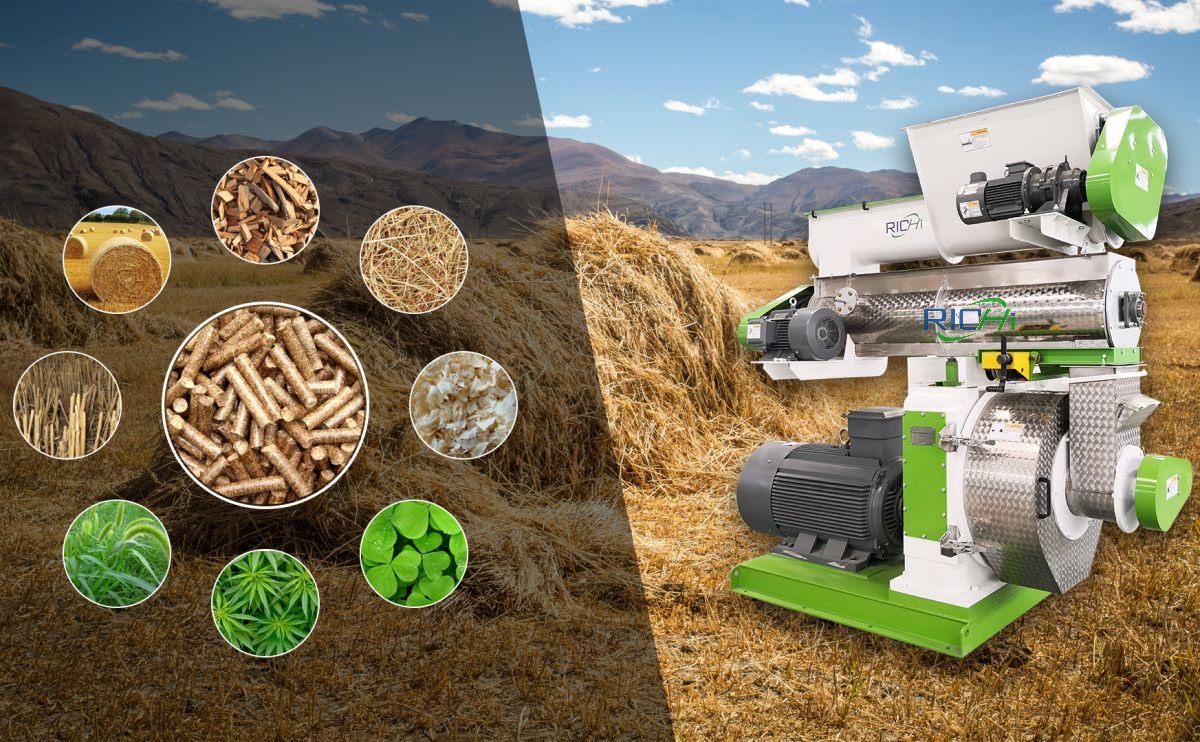





A paper pellet press should be evaluated by the cost of producing a tonne of accepted pellets, not by its purchase price or motor rating alone. Waste paper can be inexpensive at the factory gate, but sorting, handling, shredding, moisture control, wear parts, downtime and packaging all influence the final cost. The value of the product also changes by market: fuel pellets, animal bedding and cat litter have different specifications, processing steps and selling conditions.
RICHI’s paper pellet press information describes a ring-die system for newspapers, cartons and cardboard, with a published reference range of 0.2–4 t/h and pellet diameters of 4–12 mm. The model table ranges from MZLH320 at 0.2–0.3 t/h to MZLH768 at 3–4 t/h. The page notes that actual output depends on raw-material condition and moisture. Those figures are a starting point for equipment screening; a commercial cost model must use the buyer’s own paper grade, process route and saleable yield.
Establish the Real Cost of the Incoming Paper
The first question is whether the paper is purchased, generated internally or collected through a recycling network. Purchased paper has a direct acquisition and transport cost. Internally generated offcuts may appear free, but still carry collection, sorting, baling, storage and handling costs. They may also have an alternative resale value. The correct comparison is the net cost of usable paper delivered to the production line, after accounting for the value of any alternative disposal or recycling route.
Do not treat all waste paper as one raw material. Corrugated cardboard, office paper, newspapers, kraft paper and mixed paper fibers can differ in bulk density, moisture, ink, coatings, adhesives, staples and plastic contamination. These differences affect the amount of preparation required and the quality of the finished pellets. Build a supply profile by source and grade, recording accepted weight, rejection rate, moisture, delivery frequency and seasonal variation.
The paper source can change the economics more than a small difference in machine price. Clean cardboard trim from a packaging factory may require relatively straightforward size reduction and metal removal. Mixed municipal paper or printed newspapers may require more sorting and, for some cat-litter applications, de-inking or pulping. Estimate the labor, equipment and yield impact of each route before selecting the press.

Choose the Product Market Before Forecasting Revenue
Fuel pellets, bedding and cat litter should have separate financial assumptions. Fuel buyers evaluate moisture, pellet dimensions, durability, fines, storage and compatibility with the combustion system. The value of fuel pellets depends on the customer’s alternative fuel, delivery distance and handling arrangements. If pellets are consumed on-site, calculate the value of usable heat and the cost of moving and feeding the pellets into the boiler rather than assuming a market selling price.
Paper bedding competes with materials such as wood shavings and other absorbent products. The business case should include the required absorbency, dust level, odor behavior, packaging and distribution. A product with a low manufacturing cost may still be uncompetitive if it breaks down during transport or requires bulky packaging. Test the product with representative users before committing to a large production rate.
Cat litter may support a different selling price, but the quality requirements can be more demanding. Printed newspaper may contain ink residues that need to be considered in the process and product-safety review. Cardboard-based litter may need a binder or other additives to achieve the desired clumping and absorption. These steps add cost and may reduce net yield. Do not transfer fuel-pellet revenue assumptions to a cat-litter project without a separate market and quality assessment.
Calculate Saleable Yield Through the Whole Process
The press feed rate is not the same as finished packaged output. Paper can be rejected during sorting, lose mass during drying, create fines during screening or require recirculation. A sound financial model follows the material from incoming accepted paper to final product. Use screened and accepted pellets as the denominator when calculating cost per tonne.
Track the quantity removed as contaminants, moisture evaporated, fines recycled and product rejected after screening. Fines recycling may recover material, but it consumes additional handling and press capacity. Excessive recirculation can hide a poor preparation step or unstable forming condition. If de-inking or pulping is required, include process losses and the costs of water, chemicals, sludge handling and wastewater treatment where applicable.
Drying should be evaluated from water-removal duty rather than nominal dryer capacity. Record the incoming moisture, target moisture and wet feed rate using a consistent moisture basis. The amount of water removed influences heat demand, while thermal efficiency, residence time, exhaust conditions and material behavior determine actual energy use. Some paper streams may arrive sufficiently dry for the validated process; others may require drying after storage or wet processing.
Match the Press Configuration to the Prepared Feed
Paper is light and bulky, so feeding behavior is an important cost driver. RICHI describes an arch-breaking feeder and forced feeder intended to move lightweight paper fibers into the pelletizing chamber more consistently. If the material bridges in a hopper or feeds unevenly, the press may stop, require manual intervention or produce inconsistent pellets. The value of a stable feeding arrangement should be assessed through operating availability and labor, not only its motor power.
The published MZLH model table lists capacities from 0.2–0.3 t/h to 3–4 t/h and main motor power from 22 kW to 250 kW. The right model depends on prepared feed rate, paper grade, moisture, pellet diameter, operating schedule and the capacity of the cooler, screen and packaging equipment. Avoid selecting a press from gross incoming paper volume or a peak production claim without confirming the conditions behind the figure.
Ring dies and pressure rollers are important wear items. Their service life depends on contamination, abrasiveness, compression conditions, lubrication and operating hours. Estimate wear cost per saleable tonne from the actual replacement cost and the tonnage produced during the service period. Staples, grit and other hard contaminants can increase wear and damage risk, so effective sorting and metal removal can reduce costs downstream even though they add equipment and labor upstream.
The product information describes dry pelletizing without an additional steam-conditioning system for the stated paper applications. This can simplify utilities compared with processes that require a boiler. It does not eliminate the need to control moisture or validate the process for every paper grade. The buyer should confirm the operating window using actual samples and include any drying, mixing or additive equipment required by the target product.
Compare Total Energy, Labor and Maintenance Cost
Electricity cost should be calculated from measured kilowatt-hours per saleable tonne multiplied by the site’s tariff. Include the shredder, conveyors, press, cooler, screen, dust collector, mixer and packaging equipment—not just the main press motor. Heat cost should be added separately where drying is required. If the plant uses a biomass heat source, include fuel collection, handling, combustion maintenance and ash removal rather than treating the fuel as cost-free.
Labor depends on the level of automation, paper sorting requirements, product changeovers, bagging and warehouse operations. A line that needs frequent manual clearing or sorting may require more operators than its equipment list suggests. Maintenance costs should include routine lubrication, inspections, bearings, drive components, die and roller replacement, filter cleaning and unexpected repairs.
Downtime has a direct economic effect. Record stoppages caused by bridging, blockages, die changes, cleaning, upstream shortages and downstream accumulation. Estimate lost saleable output and labor during these events. A machine with a lower purchase price can have a higher lifecycle cost if it requires frequent intervention or if the auxiliary equipment is not balanced with its output.
Use a Like-for-Like Supplier Comparison
Supplier quotations should be compared using the same scope boundary. One offer may include only the press, while another includes shredding, metal separation, cooling, screening, dust collection, conveyors and packaging. Prepare a scope matrix showing which party supplies each machine, transformer, distribution panel, cables, civil works, building services, heat source, installation lifting equipment and field wiring.
Compare capacity assumptions carefully. Confirm paper grade, moisture, particle condition, pellet diameter, operating hours and whether the quoted rate refers to press discharge or saleable screened product. Also compare die configuration, feeder design, motor rating, control system, safety devices, access for maintenance and recommended spare parts. A low equipment price is not a low project cost if major process stages are excluded.
Ask suppliers how the proposed equipment will be tested using the buyer’s own paper. Define the acceptance method, product specification, test duration, sampling procedure and utility conditions before purchase. The supplier should distinguish equipment performance from results that depend on raw-material quality, moisture and buyer-supplied utilities. This makes commercial offers easier to compare and reduces disagreement during commissioning.
Validate the Business Case With a Production Trial
A representative trial should use the paper grades the plant will actually receive. Record supplier, grade, moisture, contamination, preparation settings, any additives, feeder settings, die, pellet dimensions, electricity, heat, fines, yield and saleable output. Test finished pellets against the intended fuel, bedding or litter specification. A clean, dry cardboard sample cannot prove performance on wet mixed paper or printed newspaper.
Acceptance should be based on a defined operating period rather than a brief peak reading. Include start-up, changeover and normal operating interruptions in the record. Calculate saleable output after cooling and screening, then update the financial model with measured yield, energy, labor and wear assumptions. If the trial result differs from the proposal, identify whether the cause is raw material, process configuration, operator settings or equipment capacity before approving the investment.
Conclusion: Make the Decision on Cost per Saleable Tonne
The economics of a paper pellet press depend on the value and consistency of the paper supply, the product market, preparation requirements, saleable yield, energy, wear, labor, downtime and logistics. Fuel, bedding and cat litter require different process and quality assumptions. The best equipment choice is the one that reliably produces the required product at a competitive lifecycle cost under the buyer’s actual operating conditions.
For equipment details and model options, review the RICHI paper pellet press range. Prepare representative paper samples, supply estimates, target product, utility costs and packaging requirements so the project can be evaluated using a realistic cost per saleable tonne.