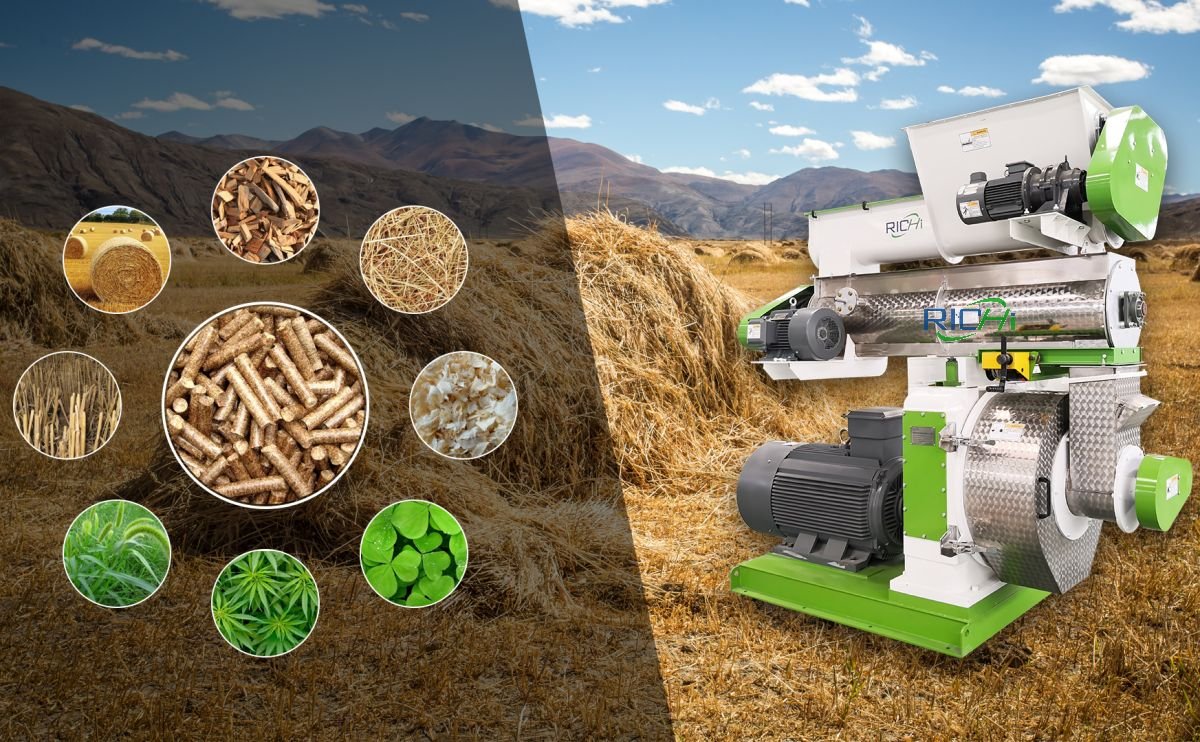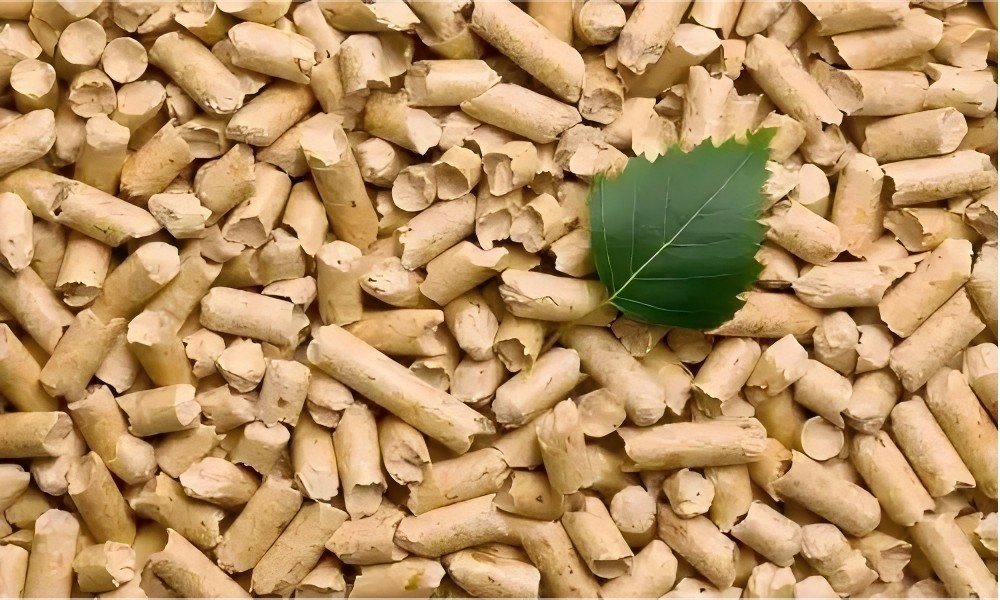


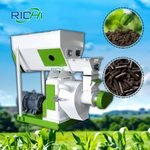
Wood chips and wood waste are widely generated by sawmills, forestry operations, furniture factories, wood-processing plants, construction activities, and agricultural operations. Instead of treating these materials as waste, many businesses process them into valuable products such as wood pellets, biomass fuel, briquettes, animal bedding, wood powder, and other biomass products.
However, wood waste is often produced in different sizes and shapes. Large branches, wood chips, bark, sawdust, shavings, and irregular wood residues cannot always be processed using the same equipment. Proper crushing and size reduction are therefore essential for creating a consistent raw material for downstream processing.
The right crushing process depends on the original material size, moisture content, wood species, required final particle size, production capacity, and final application.
For example, large branches may need to be processed by a wood chipper before entering a crusher. Wood chips can be further reduced using a wood crusher or hammer mill, while fine sawdust may only require additional crushing when its particle size is too large or inconsistent.
A sawdust crushing machine can be an important part of a biomass processing system when sawdust or fine wood residues need further size reduction.
This article explains how to crush wood chips and wood waste, which machines can be used, how to select the right equipment, and how crushing can prepare wood materials for pellet production and other applications.
Why Crush Wood Chips and Wood Waste?
The main purpose of crushing wood is to reduce large or irregular material into a more suitable and uniform particle size.
This can improve the performance of downstream processes such as:
- Drying
- Pelletizing
- Briquetting
- Combustion
- Mixing
- Conveying
- Screening
- Storage
- Packaging
Raw wood waste may contain a mixture of large pieces and fine particles.
For example, a wood-processing facility may generate:
- Wood chips
- Sawdust
- Wood shavings
- Bark
- Branches
- Small logs
- Offcuts
- Furniture wood waste
If these materials are sent directly to a pellet mill or dryer, oversized pieces can cause unstable feeding and uneven processing.
Crushing helps transform this inconsistent material into a more manageable feedstock.
However, the objective is not necessarily to produce the smallest possible particles.
The correct particle size depends on the next processing stage.
What Types of Wood Waste Can Be Crushed?
Before selecting a crushing machine, identify the actual raw material.
Different types of wood waste have different processing requirements.
Wood Chips
Wood chips are commonly produced by chipping logs, branches, and forestry residues.
Their dimensions can vary depending on the chipper used.
If the chips are too large for the next stage, they can be processed through a crusher or hammer mill.
Sawdust
Sawdust is a fine wood residue generated by sawing and machining operations.
Because sawdust is already relatively fine, additional crushing is not always required.
However, some sawdust contains oversized particles, clumps, wood shavings, or inconsistent material.
In these cases, a sawdust crushing machine can reduce the material further and improve particle-size uniformity.
(Related machine: https://pelletisingmachine.com/sawdust-hammer-mill/)
Wood Shavings
Wood shavings are lightweight and irregular.
Depending on their intended use, they may be processed into smaller particles for pellets, briquettes, fuel, or other biomass products.
Branches
Branches are generally too large for conventional fine grinding equipment.
A wood chipper is usually used first to reduce branches into chips.
The chips can then enter a secondary crusher if smaller particles are required.
Bark
Bark can be processed as a biomass fuel or pellet raw material.
Its hardness, moisture, and particle structure vary considerably, so the crushing equipment should be selected based on actual material characteristics.
Furniture and Wood-Processing Waste
Clean wood offcuts and production residues can be processed into biomass fuel.
However, recycled wood may contain nails, screws, metal parts, coatings, or other contaminants.
Sorting and metal removal should therefore be considered before crushing.
Step 1: Inspect and Sort the Wood Waste
The first step is to inspect the incoming material.
Do not send unknown mixed wood waste directly into a high-speed crusher.
Check:
- Material type
- Maximum particle size
- Moisture
- Contamination
- Metal content
- Stones or other foreign materials
- Bulk density
- Existing particle size distribution
For clean sawdust from a sawmill, the preparation process may be relatively simple.
For mixed wood waste, additional sorting equipment may be necessary.
Removing metal is particularly important because nails, screws, bolts, and other metal objects can damage hammers, knives, screens, bearings, and other components.
Step 2: Determine the Initial Particle Size
The size of the incoming material determines which machine should be used.
A useful principle is:
Large wood → Coarse size reduction → Fine crushing → Screening → Drying/Pelletizing
Large logs and branches normally require a chipper.
Wood chips may require a crusher or hammer mill.
Fine sawdust may require only screening or additional grinding.
This multi-stage approach is often more efficient than trying to use one machine for every size-reduction task.
Step 3: Use a Wood Chipper for Large Wood
If the raw material consists of logs, branches, tree trunks, or large wood pieces, a wood chipper is normally the first step.
The chipper cuts large wood into smaller chips.
The resulting chips are easier to:
- Convey
- Store
- Dry
- Crush
- Screen
- Pelletize
A typical process for forestry residues may therefore be:
Logs and Branches → Wood Chipper → Wood Crusher/Hammer Mill → Dryer → Pellet Mill
The exact configuration depends on the required final product.
Step 4: Crush Wood Chips
Once large wood has been converted into chips, further crushing may be necessary.
A wood crusher or hammer mill can reduce the chip size.
In a hammer mill, the basic process is:
Feeding → Impact Crushing → Screening → Discharge
Wood chips enter the grinding chamber.
A high-speed rotor carries hammers that impact the material repeatedly.
The wood is gradually broken into smaller particles.
A screen controls the size of particles that can leave the grinding chamber.
Particles that are still too large remain inside and continue to be processed.
This process creates a more consistent output for downstream equipment.
How a Hammer Mill Crushes Wood Chips
A hammer mill is one of the commonly used machines for reducing biomass materials.
Its main components generally include:
- Feeding system
- Grinding chamber
- Rotor
- Hammers
- Screen
- Bearings
- Drive system
- Discharge system
- Housing
When wood chips enter the chamber, the rotating hammers strike the material.
Repeated impact causes the wood to break into smaller pieces.
The screen determines when particles can exit the grinding chamber.
The final particle size therefore depends partly on the screen opening.
A smaller screen opening can produce finer material, but it may also reduce throughput and increase energy consumption.
The ideal screen should therefore be selected according to the downstream process.
Step 5: Crush Sawdust When Necessary
Sawdust is already much smaller than wood chips, but its particle size may still be unsuitable for some applications.
For example, sawdust may contain:
- Oversized wood particles
- Long shavings
- Clumps
- Uneven particles
- Coarse residues
A sawdust crushing machine can be used to further reduce these materials.
This is particularly useful when the final application requires relatively uniform particles.
However, additional crushing should not automatically be added to every sawdust processing line.
If the sawdust already meets the particle-size and moisture requirements of the pellet mill, it may be possible to send it directly to drying or pelletizing.
This can reduce unnecessary electricity consumption and equipment investment.
Step 6: Control the Final Particle Size
Particle size is one of the most important factors in wood crushing.
The ideal size depends on the final application.
Wood Pellets
For wood pellet production, the material should generally be small and uniform enough for stable pellet mill feeding and compression.
The exact requirement depends on:
- Pellet diameter
- Wood species
- Moisture
- Pellet mill design
- Die compression ratio
- Raw material structure
Briquettes
Briquette production can have different particle-size requirements depending on the briquetting machine and product specification.
Biomass Fuel
Fuel applications may tolerate a wider range of particle sizes, depending on the combustion equipment.
Animal Bedding
Bedding pellets and other bedding products may require specific particle characteristics to achieve the desired pellet strength and absorbency.
Therefore, the final particle size should always be determined by the end-use requirement.
Why Smaller Particles Are Not Always Better
One common mistake in wood processing is assuming that finer particles automatically produce better results.
This is not always true.
Excessive grinding can increase:
- Electricity consumption
- Hammer or knife wear
- Screen wear
- Dust generation
- Heat generation
- Operating costs
If the pellet mill can process a certain particle size effectively, grinding the material significantly finer may provide little additional benefit.
The correct approach is to achieve the required particle size with the lowest reasonable processing cost.
How Moisture Affects Wood Crushing
Moisture has a significant influence on crushing performance.
Very wet wood may be difficult to process in some hammer mills and crushers.
Possible problems include:
- Material sticking to the screen
- Reduced throughput
- Chamber blockage
- Increased energy consumption
- Uneven particle size
- More frequent cleaning
Very dry material, on the other hand, can generate more dust during crushing.
Therefore, moisture should be considered together with the crushing process and dust-control system.
For wood pellet production, the crushing and drying processes should be designed together.
Should Wood Be Crushed Before or After Drying?
The answer depends on the raw material.
For large wet wood chips, crushing before drying can reduce particle size and increase surface area, potentially helping moisture removal.
However, if the material is very wet and sticky, excessive grinding before drying may create operational problems.
For relatively dry sawdust, crushing before pelletizing may be practical.
A typical process can therefore be:
Wood Chips → Crushing → Drying → Fine Grinding → Pelletizing
Another project may use:
Wood Chips → Drying → Grinding → Pelletizing
The correct process depends on:
- Initial moisture
- Initial particle size
- Final particle size
- Dryer type
- Crusher design
- Pellet mill requirements
How Crushing Improves Wood Drying
Crushing and drying are closely connected.
When large wood particles are reduced to smaller particles, the available surface area increases.
This allows hot air to contact more of the material surface.
As a result, moisture can move from the inside of the material toward the surface and evaporate more effectively.
A suitable particle size can therefore contribute to:
- More uniform drying
- Better heat transfer
- More stable dryer operation
- More consistent final moisture
However, extremely fine particles can increase dust and air-handling requirements.
The goal is to find a practical balance.
Wood Crushing for Pellet Production
Wood pellet production is one of the most common applications for crushed wood residues.
A typical production process is:
Raw Wood → Chipping → Crushing → Drying → Fine Grinding → Pelletizing → Cooling → Screening → Packing
Not every project needs every stage.
For example, clean sawdust may enter the process after receiving and screening.
A plant processing large branches may require both chipping and crushing.
A plant using already-dry wood chips may have a different process from a plant using high-moisture forestry residues.
The production line should therefore be customized according to the raw material.
What Equipment Is Used to Crush Wood?
Several types of equipment may be used.
1. Wood Chipper
Best suited for:
- Logs
- Branches
- Tree trunks
- Large forestry residues
Its primary function is coarse size reduction.
2. Wood Crusher
Suitable for reducing relatively large wood particles into smaller material.
3. Hammer Mill
Commonly used for wood chips, sawdust, and other biomass materials.
It uses impact force and a screen to control the output size.
4. Sawdust Crushing Machine
Designed for additional size reduction of sawdust and fine wood residues.
It can help produce more uniform material when existing sawdust is too coarse or inconsistent.
5. Wood Shredder
Useful for bulky and irregular wood waste.
Shredders are often used for coarse size reduction rather than producing the fine particle size required directly by a pellet mill.
6. Fine Grinder or Pulverizer
Used when particularly fine material is required.
Such equipment should only be used when the final application requires fine grinding because energy consumption can increase significantly as particle size decreases.
How to Choose the Right Wood Crushing Machine
Selecting the correct machine requires more than knowing the material name.
Consider the following factors.
Raw Material
Identify exactly what you will process.
“Sawdust” and “wood waste” are too broad for accurate machine selection.
Provide information about the material source and structure.
Maximum Feed Size
Tell the manufacturer the largest diameter or dimension.
This determines whether you need a chipper, crusher, or hammer mill.
Moisture
Provide the initial moisture range.
This is particularly important for fresh forestry residues and wet wood chips.
Required Final Size
Specify the target particle size.
Different applications require different sizes.
Capacity
Tell the supplier how many tons of material you need to process per hour.
Capacity should be evaluated under conditions similar to your actual raw material.
Motor Power
The required motor depends on material characteristics, capacity, and particle-size reduction requirements.
A larger motor is not automatically better.
Screen Configuration
For hammer mills, the screen has a direct influence on output particle size and throughput.
Wear Parts
Ask about:
- Hammer life
- Knife life
- Screen life
- Bearing maintenance
- Replacement cost
- Spare-part availability
Dust Collection
Dry wood crushing can generate significant dust.
The crusher should therefore be integrated with an appropriate dust collection system.
(investigate this site:RICHI Machinery)
How to Improve Wood Crushing Efficiency
Once the machine is selected, operating conditions also influence performance.
Maintain Stable Feeding
Overfeeding can overload the machine.
Underfeeding can reduce utilization.
A controlled feeding system helps maintain stable operation.
Use the Correct Screen
Choose a screen suitable for the desired final particle size.
Do not use an unnecessarily fine screen.
Keep Hammers and Knives in Good Condition
Worn tools can reduce crushing efficiency.
Regular inspection helps prevent unexpected downtime.
Control Moisture
Keep the material within a suitable moisture range for the selected machine.
Remove Metal
Metal contamination can cause serious damage.
Magnetic separation may be necessary for recycled wood.
Maintain Dust Collection
A blocked filter or poor airflow can affect the overall crushing system.
Dust collection should be inspected regularly.
Dust Control During Wood Crushing
Dust management is particularly important when processing dry sawdust.
Fine biomass particles can become airborne during crushing, conveying, and screening.
A dust collection system may include:
- Cyclone
- Bag filter
- Dust collector
- Exhaust fan
- Ducting
- Dust discharge equipment
The design should be matched to the crusher capacity and material characteristics.
Operators should also follow applicable workplace and fire-safety requirements.
For industrial biomass plants, dust control should be included in the original engineering design.
Maintenance of Wood Crushing Equipment
Regular maintenance helps maintain stable crushing performance.
Important maintenance tasks include:
Check Hammers
Inspect hammers for wear and damage.
Check Screens
Inspect the screen for blockage, deformation, or excessive wear.
Lubricate Bearings
Follow the manufacturer’s recommended lubrication schedule.
Inspect the Rotor
Check for abnormal vibration or imbalance.
Check Fasteners
Inspect bolts and other connections regularly.
Clean the Grinding Chamber
Accumulated material can affect airflow and crushing performance.
Check the Motor
Monitor motor temperature, vibration, current, and abnormal noise.
Preventive maintenance can reduce downtime and extend equipment service life.
How to Build a Wood Waste Crushing Line
A complete wood waste processing system may contain several stages.
For example:
Wood Waste Receiving
↓
Sorting and Metal Removal
↓
Wood Chipping
↓
Wood Crushing
↓
Screening
↓
Drying
↓
Fine Grinding
↓
Pelletizing
↓
Cooling
↓
Final Screening
↓
Packing
Not every project needs this complete configuration.
If the raw material is already fine sawdust, the process may be much shorter:
Sawdust Receiving → Screening → Drying → Pelletizing → Cooling → Packing
If the sawdust is too coarse, an additional sawdust crushing machine can be installed before or after drying according to the process design.
This flexibility is important because unnecessary processing increases capital and operating costs.
Wood Crushing for Different Applications
Wood Pellet Production
Crushing prepares biomass for pelletizing by reducing oversized particles and improving particle-size consistency.
Biomass Briquettes
Crushing can prepare wood waste for densification into briquettes.
Biomass Fuel
Wood chips and residues can be processed into fuel with suitable particle-size control.
Animal Bedding
Wood residues can be processed into bedding pellets or other bedding products.
Wood Powder
When a very fine material is required, additional grinding or pulverizing may be necessary.
The correct machine depends on the final product rather than the raw material alone.
Why Complete Process Design Matters
A wood crusher does not operate independently.
Its performance affects the dryer, pellet mill, conveyors, screening system, and other downstream equipment.
For example, if the crusher produces too much oversized material, the pellet mill may have difficulty processing it.
If the crusher produces unnecessarily fine powder, energy consumption and dust generation may increase.
If the crusher capacity is too low, it may restrict the entire production line.
Therefore, the crushing section should be designed together with the complete process.
RICHI can provide equipment and turnkey engineering solutions for biomass processing projects, including wood chipping, crushing, grinding, drying, pelletizing, cooling, screening, conveying, dust collection, and packing.
The system can be designed according to:
- Raw material
- Feed size
- Moisture
- Required particle size
- Production capacity
- Final product
- Factory layout
- Local operating conditions
Frequently Asked Questions
Can wood chips be crushed into sawdust?
Yes. Wood chips can be further processed using suitable crushing or grinding equipment to produce smaller wood particles. The exact machine depends on the initial chip size and desired final size.
What machine is best for crushing wood chips?
A wood crusher or hammer mill can be suitable for wood chips, while large logs and branches generally require a wood chipper before fine crushing.
Can a sawdust crushing machine process wood chips?
Some machines can process both sawdust and relatively small wood chips, but the maximum feeding size and material characteristics must be checked before selection.
Does all sawdust need to be crushed?
No. If the sawdust already meets the required particle-size specification, additional crushing may not be necessary.
What moisture is suitable for wood crushing?
There is no single moisture value suitable for every machine. The acceptable range depends on the crusher design, raw material, particle size, and downstream process.
Is crushing necessary before wood pellet production?
It depends on the raw material. Large wood generally needs chipping and further size reduction, while properly sized sawdust may require little or no additional crushing.
Can wood crushing improve pellet quality?
It can contribute to more consistent particle size and feeding, which supports stable pelletizing. However, pellet quality also depends on moisture, wood species, die compression, pellet mill operation, cooling, and other factors.
How can I reduce wood crushing energy consumption?
Avoid unnecessary over-grinding, use the correct screen, maintain wear parts, control feeding, and select a machine matched to the raw material and required particle size.
Conclusion
Crushing wood chips and wood waste is an important step in biomass processing. It reduces oversized material, improves particle-size consistency, supports drying, and prepares wood residues for pelletizing, briquetting, fuel production, and other applications.
The correct crushing method depends on the raw material.
Large logs and branches normally require a wood chipper first. Wood chips can then be processed by a crusher or hammer mill. Sawdust is already relatively fine, but a sawdust crushing machine can be useful when the material contains oversized particles, clumps, shavings, or other coarse residues.
The goal should not be to make the material as fine as possible. Instead, the objective is to achieve the particle size required by the next process while controlling energy consumption, dust, wear, and operating costs.
For a complete wood pellet project, crushing should be designed together with drying, grinding, pelletizing, cooling, screening, conveying, and packing.
Before choosing equipment, provide the manufacturer with accurate information about your raw material, maximum feed size, moisture, required particle size, and production capacity. With these parameters, a suitable crushing system can be designed to provide stable material preparation and reliable downstream pellet production.