Shrimp farming has changed a lot over the past two decades. What used to be a coastal, family-run activity in many regions has become a structured industry with hatcheries, nurseries, grow-out ponds, processing plants, and export supply chains. Along with that shift comes a less visible but equally important question: how do farms and feed producers plan production so that feed arrives on time, at the right formulation, and at a cost that still leaves room for profit?
Feed is the single largest operating cost in most shrimp farming operations. Depending on the system and intensity, it can represent more than half of total production expenses. That means any decision about feed — its formula, its pellet size, its water stability, its sourcing — has a direct effect on whether a farm stays viable. And behind every bag of feed is a production line that has to be designed, sized, and managed properly.
This article looks at shrimp feed production from the perspective of planning and operations rather than equipment sales. It covers raw materials, processing steps, capacity decisions, cost drivers, and the practical issues that come up when a feed mill is built or expanded.
Why Shrimp Feed Is Different from Other Aquatic Feeds
Shrimp are not simply small fish. They feed slowly, they graze rather than strike, and they live on the pond bottom where pellets can dissolve or break apart before being consumed. A pellet that works well for tilapia or catfish may perform poorly in a shrimp pond.
The key differences come down to a few physical and biological factors:
- Water stability. Shrimp take time to find and consume feed. Pellets need to hold together in water for a reasonable period without turning into mush.
- Sinking behavior. Most shrimp feed is designed to sink slowly and settle on the pond bottom. Floating feed is generally not suitable for shrimp.
- Particle size. Shrimp go through larval, post-larval, juvenile, and grow-out stages, each requiring different pellet or crumble sizes.
- Attractability. Shrimp rely heavily on chemical cues to locate feed. Ingredients that leach attractive compounds too quickly can waste feed and degrade water quality.
- Binder systems. Because shrimp feed often contains high levels of fishmeal, squid meal, and other marine proteins, the binding system has to be adjusted to hold the pellet together.
These factors mean that shrimp feed production is not just about grinding and pressing. It involves careful control of moisture, temperature, pressure, and formulation. A shrimp feed pellet machine sits at the center of that process, but it only performs well when the upstream and downstream steps are set up correctly.
Raw Materials and Formulation Basics
Shrimp feed formulations vary by species, life stage, and region, but most share a common structure. Marine protein sources typically make up a significant portion of the formula, supported by plant proteins, binders, lipids, minerals, and premixes.
Common ingredients include:
- Fishmeal and fish oil
- Squid meal and krill meal
- Soybean meal and wheat gluten
- Peanut meal and rapeseed meal
- Wheat flour or starch as a binder
- Lecithin and phospholipids
- Vitamin and mineral premixes
- Astaxanthin or other pigments in some formulations
Formulation is a balancing act. Fishmeal improves palatability and growth but is expensive and subject to supply fluctuations. Plant proteins reduce cost but can affect digestibility and water stability if not processed well. Binders such as wheat gluten or specialty starches help the pellet survive in water, but too much binder can reduce nutritional density.
For feed producers, the practical challenge is consistency. A formula that works in a laboratory may behave differently when scaled to a 2–3 T/H line using locally sourced ingredients with varying moisture and particle size. This is why many producers test small batches before committing to full-scale production.
The Production Process Step by Step
A shrimp feed production line typically includes several stages, each of which affects the final pellet quality.
Grinding and Particle Size Control
Raw materials must be ground to a consistent particle size before mixing. Fine grinding improves gelatinization during extrusion and helps the pellet hold together. Coarse particles can create weak points that cause the pellet to break apart in water.
Hammer mills and pulverizers are common at this stage. Screen size selection depends on the target pellet diameter. For small crumbles used in nursery stages, finer grinding is usually required.
Mixing and Uniformity
After grinding, ingredients are weighed and mixed. Uniformity matters because shrimp are sensitive to small variations in nutrient content. If a batch is not mixed properly, some pellets may contain more protein than others, leading to inconsistent growth.
Mixers range from simple horizontal ribbon mixers to more advanced double-shaft designs. The choice depends on batch size, formulation complexity, and the level of automation in the plant.
Extrusion and Pellet Formation
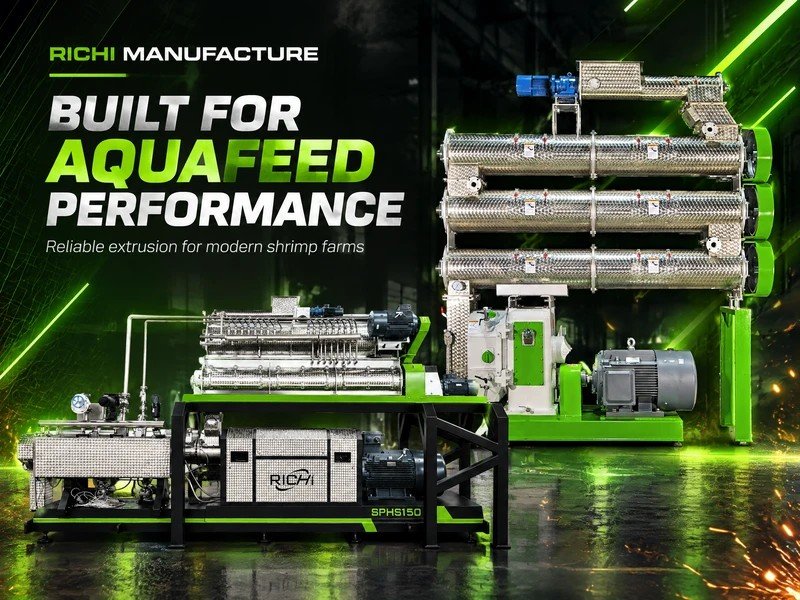
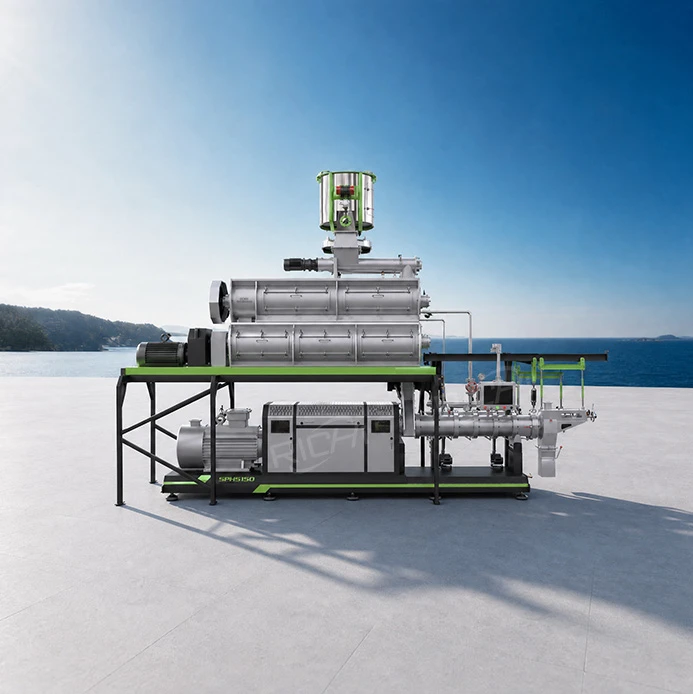
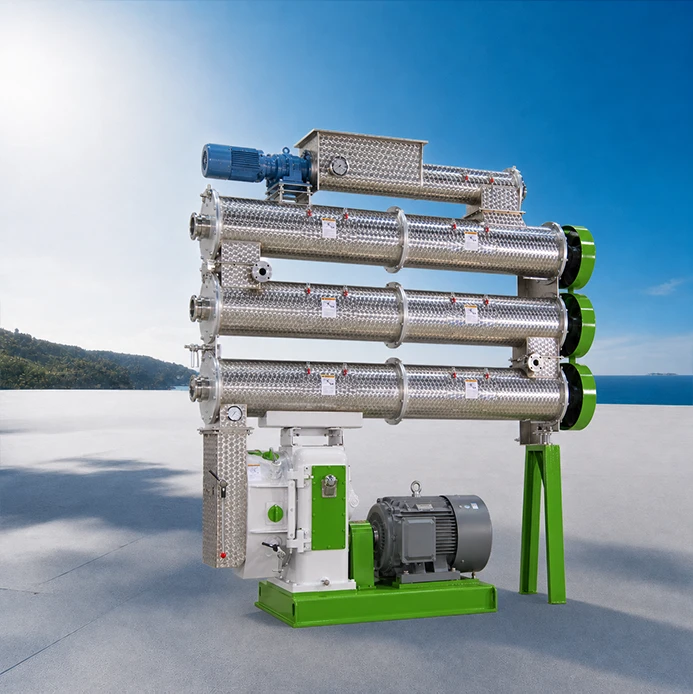
This is where the shrimp feed pellet machine does its main work. Extrusion cooks the mixture under controlled moisture, temperature, and pressure, then forces it through a die to form pellets. The process gelatinizes starches, denatures proteins, and creates a durable structure.
Key parameters include:
- Moisture content at the extruder inlet
- Barrel temperature profile
- Screw speed and configuration
- Die diameter and die open area
- Cutting speed for pellet length control
Getting these parameters right is not a one-time task. As ingredient sources change, operators often need to adjust settings to maintain pellet quality. This is one reason why training and technical support matter as much as the machine itself.
Drying and Cooling
Freshly extruded pellets contain too much moisture for safe storage. They pass through a dryer, then a cooler, to bring moisture down to a stable level. Over-drying can make pellets brittle; under-drying can lead to mold and spoilage.
Coating and Finishing
Some shrimp feeds receive a top coating of oil, lecithin, or other additives after drying. This improves nutritional value and palatability. Coating equipment must apply the liquid evenly without damaging the pellet.
Screening and Packaging
Finished pellets are screened to remove fines and undersized particles. The acceptable fraction is then weighed and packed into bags or bulk containers. Fines can be reprocessed, but excessive fines indicate a problem upstream in the process.
Capacity Planning: What Does 2–3 T/H Really Mean?
When a producer looks at a 2-3 T/H shrimp feed pellet machine for sale, the first question is usually whether that capacity matches actual demand. The answer depends on several factors that are easy to overlook.
A nominal 2–3 T/H rating typically refers to output under ideal conditions with a specific formulation and pellet size. In real production, output can be lower because of:
- Changeovers between formulations
- Startup and shutdown losses
- Downtime for maintenance
- Variations in raw material moisture
- Different pellet sizes and shapes
This means a line rated at 3 T/H might realistically produce 18–22 tons over a two-shift day, not 24 tons. Planning should account for this gap.
It also helps to think in terms of annual demand. A farm or feed mill serving a defined growing area can estimate monthly feed needs based on stocking density, survival rates, feed conversion ratios, and harvest schedules. That estimate then determines whether a single line is enough or whether a second line should be planned from the start.
For producers who expect to expand, modular design is often more practical than buying a large line immediately. A smaller line can be added to later, or a single line can be upgraded with additional downstream equipment.
Cost Structure and Where Money Goes
Feed production costs fall into several categories:
- Raw materials (usually the largest share)
- Energy for grinding, extrusion, drying, and conveying
- Labor
- Maintenance and spare parts
- Packaging and transport
- Financing and depreciation
Raw material costs dominate, but the other categories are where operational decisions make a visible difference. Energy consumption, for example, varies significantly depending on equipment efficiency and how well the line is matched to the workload. Running a large extruder at low output is inefficient; running a small extruder beyond its design capacity causes wear and inconsistent quality.
Labor is another factor. A highly automated line may need fewer operators, but it requires more skilled technicians and better maintenance planning. In regions where labor is inexpensive but technical training is limited, a simpler line with robust mechanical components may be more practical than a fully automated system.
Maintenance is often underestimated. Dies, screws, bearings, and belts wear over time. Producers who plan for spare parts and scheduled downtime avoid the more expensive problem of unplanned breakdowns during a peak production period.
Water Stability and Its Role in Feed Efficiency
Water stability is one of the most important quality指标 for shrimp feed, though it is often treated as a secondary concern. A pellet that disintegrates quickly releases nutrients into the water, where they are either lost or contribute to algae blooms and poor water quality.
Improving water stability usually involves:
- Proper binder selection and dosage
- Optimal extrusion parameters
- Adequate drying and cooling
- Gentle handling after extrusion to avoid cracks
Producers can test stability by placing pellets in water and observing how long they hold their shape. A simple test like this, done consistently, provides useful feedback for adjusting the production process.
Better water stability means less waste, better feed conversion, and cleaner ponds. Over time, these improvements show up in the cost per kilogram of shrimp produced, not just in the feed mill’s output numbers.
Automation and Process Control
Automation in shrimp feed production has become more accessible in recent years. PLC-based control systems, touchscreen interfaces, and remote monitoring are no longer limited to large industrial plants. Even mid-sized producers can now install systems that track temperature, moisture, and motor load in real time.
The benefits are practical:
- More consistent pellet quality
- Faster response to process deviations
- Better records for troubleshooting
- Reduced reliance on operator experience alone
That said, automation is not a substitute for understanding the process. A control system can maintain settings, but it cannot decide whether a formulation change requires a different die or a different drying profile. Those decisions still depend on people who know the materials and the equipment.
Maintenance and Long-Term Reliability
Shrimp feed production is hard on equipment. Abrasive ingredients, high moisture, and continuous operation all take a toll. A maintenance plan should cover:
- Daily checks on lubrication, belts, and fasteners
- Weekly inspection of dies and cutting blades
- Monthly review of motor loads and temperature trends
- Scheduled replacement of wear parts based on hours of operation
Keeping spare dies and screens on hand is especially important. A worn die affects pellet shape, density, and output. Waiting for a replacement to arrive can shut down production for days.
Training operators to recognize early signs of wear — changes in pellet appearance, increased power draw, unusual noise — prevents small issues from becoming major failures.
Regional Differences in Shrimp Feed Production
Shrimp farming takes different forms in different regions, and feed production follows suit.
In Southeast Asia, intensive pond systems dominate in many areas. Feed demand is high and consistent, and producers often favor medium-to-large lines with good automation. Competition is strong, so feed quality and cost control are both critical.
In Latin America, large integrated operations sometimes produce their own feed to control quality and reduce dependence on external suppliers. These operations may prefer custom formulations and flexible production schedules.
In parts of Africa and the Middle East, shrimp farming is still developing in some regions. Producers there may start with smaller lines and simpler formulations, then expand as markets develop.
In all cases, the local availability of raw materials shapes the formulation and the production process. A region with abundant fishmeal by-products may use different binders and extrusion settings than one that relies more on plant proteins.
Sustainability and Feed Innovation
Sustainability pressures are changing shrimp feed production. Fishmeal and fish oil supplies are limited, and prices have risen over time. This has encouraged research into alternative proteins from sources such as:
- Insect meal
- Single-cell proteins
- Fermented plant proteins
- Algae-based ingredients
These alternatives can reduce reliance on wild-caught fish, but they also change the processing requirements. Some ingredients behave differently in the extruder, requiring adjustments to moisture, temperature, or binder levels.
For feed producers, staying informed about these developments is part of long-term planning. A line that can handle a range of formulations is more resilient than one designed for a single ingredient mix.
Choosing a Supplier and Planning the Project
Building or expanding a shrimp feed production line involves more than selecting a machine. It requires a supplier who can help with layout, process design, installation, and ongoing support. The difference between a smooth startup and a prolonged troubleshooting period often comes down to how well the supplier understands the application.
Producers should ask potential suppliers about:
- Experience with shrimp feed specifically, not just general aquatic feed
- Ability to test formulations or provide reference data
- Support for installation and commissioning
- Availability of spare parts and technical assistance
- Willingness to discuss layout and workflow, not just equipment specifications
Richi Manufacture is one supplier that works with feed producers on complete project planning, from raw material handling to finished pellet packaging. For producers who want to review a specific configuration, this 2-3 T/H shrimp feed pellet machine for sale option provides a starting point for discussion.
It also helps to visit an existing production site if possible. Seeing a line in operation reveals details that specifications alone cannot convey — how materials flow, where bottlenecks occur, how operators manage changeovers, and what maintenance tasks are actually required.
For more detailed information on equipment and project options, the product page at https://pelletmakermachine.com/shrimp-feed-pellet-mill/ provides additional reference material.
Common Mistakes in Shrimp Feed Project Planning
A few recurring problems show up in shrimp feed projects:
- Sizing the line too small. Producers underestimate demand growth and end up running equipment beyond its design capacity.
- Ignoring water stability. Formulations are chosen for cost or protein content without testing how pellets behave in water.
- Underestimating drying and cooling. These stages are treated as afterthoughts, but they affect storage life and pellet quality.
- Skipping operator training. Even good equipment performs poorly without trained operators.
- Poor layout planning. Inefficient material flow adds labor and energy costs that persist for the life of the plant.
Avoiding these mistakes starts with realistic planning and a supplier who asks the right questions before quoting equipment.
What Comes Next
Shrimp farming will continue to intensify in many regions, and feed production will have to keep pace. That means more attention to formulation, process control, energy efficiency, and sustainability. Producers who treat feed production as a core part of their business, rather than a supporting activity, will be better positioned to manage costs and quality.
The equipment matters, but it is only one part of the picture. Raw material sourcing, formulation, process control, maintenance, and staff training all contribute to the final result. A well-planned line, matched to actual demand and supported by a supplier who understands the application, gives producers a foundation they can build on as the industry evolves.