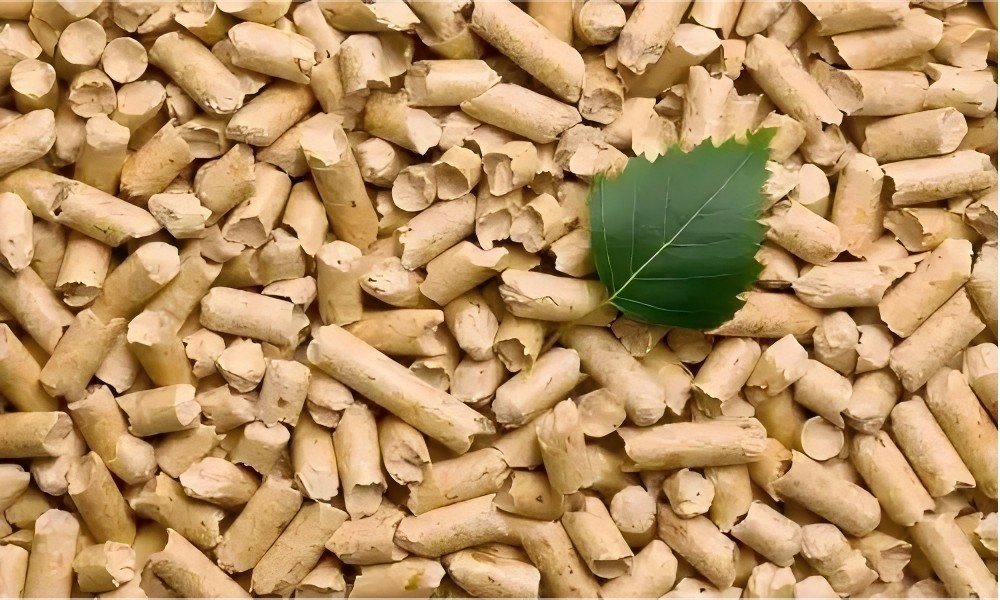





Sawdust pellets are one of the most widely used forms of densified biomass fuel. By compressing loose sawdust into small, uniform cylinders, manufacturers can create a product that is easier to store, transport, handle, and burn. However, not all sawdust pellets have the same quality. Some pellets are dense, durable, and consistent, while others may easily break apart, produce excessive fines, or have inconsistent moisture and dimensions.
Pellet quality is determined by many factors throughout the production process. Raw material characteristics, moisture content, particle size, wood species, grinding, drying, die design, roller condition, pelletizing pressure, cooling, screening, and storage can all influence the final product.
For manufacturers considering a sawdust pellet mill for sale, understanding these factors is essential. Buying a suitable pellet mill is important, but the quality of the finished pellets depends on how the entire production system is designed and operated.
This article explains the major factors affecting sawdust pellet quality and provides practical guidance for producing stronger, denser, and more uniform biomass pellets.
1. What Is Sawdust Pellet Quality?
Sawdust pellet quality can be evaluated through several physical and performance characteristics.
Important indicators include:
- Pellet density
- Durability
- Moisture content
- Pellet diameter
- Pellet length
- Amount of fines
- Ash content
- Bulk density
- Heating value
- Mechanical strength
- Storage stability
A high-quality pellet should generally maintain its shape during transportation and handling, contain an appropriate amount of moisture, produce limited fines, and provide consistent combustion performance.
The exact quality requirements depend on the intended application and applicable fuel standards.
2. Raw Material Quality
The first factor affecting pellet quality is the sawdust itself.
Sawdust can come from:
- Sawmills
- Furniture factories
- Flooring plants
- Cabinet manufacturers
- Woodworking facilities
- Timber-processing plants
Different sources produce sawdust with different characteristics.
The raw material may vary in:
- Moisture
- Particle size
- Wood species
- Fiber structure
- Bark content
- Resin content
- Ash content
Consistent raw material generally makes pellet production easier to control.
3. Wood Species
Different wood species can produce different pellet characteristics.
Hardwood and softwood may have different:
- Density
- Fiber structure
- Lignin content
- Resin content
- Moisture behavior
- Compression characteristics
Lignin is particularly important because it can act as a natural binder during pelletizing.
Under pressure and elevated temperature, lignin can soften and help wood particles bond together.
Therefore, the same pellet mill settings may not provide identical results with different types of wood.
4. Bark Content
Bark can influence pellet quality and ash content.
Compared with clean wood, bark may contain higher levels of minerals and inorganic material.
Higher bark content can therefore affect:
- Ash production
- Pellet appearance
- Combustion performance
- Abrasiveness
If premium-quality fuel pellets are required, controlling bark content may be important.
5. Raw Material Cleanliness
Sawdust should be free from foreign materials whenever possible.
Potential contaminants include:
- Stones
- Sand
- Metal
- Plastic
- Glass
- Nails
- Screws
These materials can damage pellet mill components and increase ash or contamination in the final product.
A magnetic separator and appropriate screening equipment can help improve raw material cleanliness.
6. Moisture Content
Moisture is one of the most important factors affecting pellet quality.
Sawdust needs an appropriate moisture level to form stable pellets.
If the material is too wet:
- Pellets may become soft
- The material may stick
- Pellet density may be inconsistent
- Drying costs increase
- Storage stability may decline
If the material is too dry:
- Pellets may be difficult to form
- Durability may decrease
- More fines may be generated
For many wood pellet processes, feedstock moisture is controlled around the mid-teens, but the optimal value depends on the material and equipment.
Therefore, moisture should be measured rather than estimated.
7. Moisture Uniformity
It is not enough for the average moisture to be correct.
Moisture should also be reasonably uniform throughout the material.
For example, if one part of the feedstock is wet while another part is very dry, the pellet mill may experience unstable operating conditions.
Moisture variation can cause:
- Fluctuating motor load
- Uneven pellet density
- Variable pellet durability
- Unstable production
A well-designed dryer and material mixing system can improve moisture uniformity.
8. Particle Size
Particle size directly affects pellet formation.
If particles are too large, they may not compress uniformly.
If particles are excessively fine, additional grinding energy is required and dust generation may increase.
A suitable particle-size distribution helps particles pack together effectively.
Particle size should be matched to:
- Pellet diameter
- Wood species
- Die design
- Pellet mill type
9. Grinding Quality
A hammer mill is commonly used to reduce oversized wood particles.
The objective is not simply to make the material as fine as possible.
Instead, grinding should create a suitable and consistent particle size for pelletizing.
Poor grinding may result in:
- Large particles
- Uneven pellets
- Higher fines
- Reduced pellet durability
Excessive grinding may result in:
- Higher electricity consumption
- More dust
- Lower overall production efficiency
Therefore, grinding should be optimized rather than maximized.
10. Drying Conditions
Drying is essential when sawdust contains excessive moisture.
An industrial rotary dryer may be used to reduce moisture before pelletizing.
Drying performance depends on:
- Initial moisture
- Air temperature
- Airflow
- Material residence time
- Feed rate
- Dryer design
Over-drying can be just as undesirable as insufficient drying.
The goal is to achieve the required moisture level consistently without wasting energy.
11. Temperature During Pelletizing
Temperature inside the pellet mill can influence pellet formation.
Mechanical friction and compression generate heat.
As the temperature increases, natural lignin can soften and contribute to particle bonding.
However, excessive temperature can create undesirable operating conditions.
Therefore, the pellet mill should operate within an appropriate range for the specific raw material and equipment.
12. Pellet Mill Design
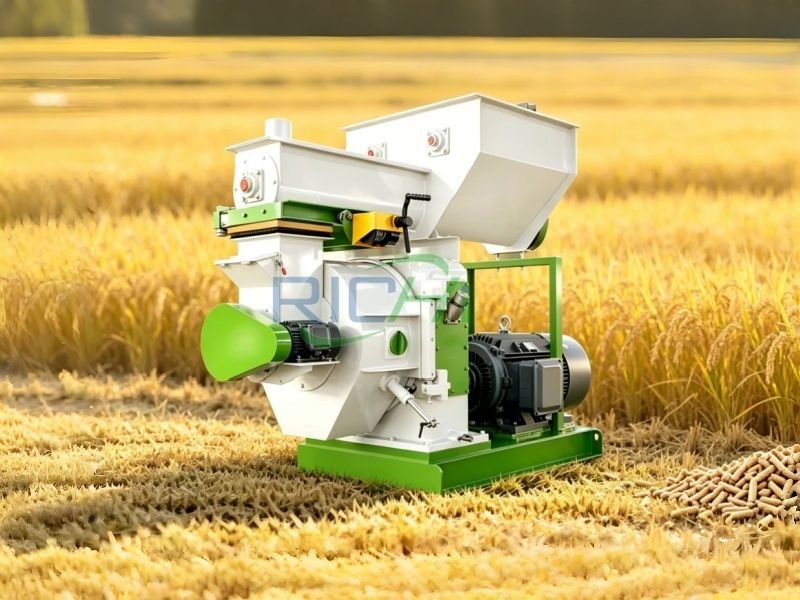
The pellet mill is the core machine responsible for pellet formation.
A typical ring-die pellet mill includes:
- Feeder
- Pelletizing chamber
- Ring die
- Pressure rollers
- Main drive
- Lubrication system
- Cutter
- Discharge system
The machine’s design directly affects:
- Production capacity
- Pellet density
- Pellet durability
- Energy consumption
- Operating stability
This is why selecting the right machine is critical when evaluating a sawdust pellet mill for sale.
13. Ring Die Specifications
The ring die determines the basic diameter of the pellets.
It also influences compression characteristics.
Important die parameters include:
- Hole diameter
- Effective hole length
- Compression ratio
- Material
- Manufacturing precision
A die must be selected according to the raw material and target pellet specifications.
Using an unsuitable die can cause:
- Low output
- High energy consumption
- Poor pellet quality
- Excessive wear
14. Compression Ratio
The compression ratio describes the relationship between the effective die-hole length and hole diameter.
Different sawdust types require different compression conditions.
If compression is too low, pellets may be weak.
If compression is too high, the pellet mill may consume more power and experience increased wear.
The optimal compression ratio should therefore be determined according to actual feedstock characteristics and desired pellet quality.
15. Pressure Roller Condition
Pressure rollers work with the ring die to compress sawdust.
Their surface condition is important.
Worn rollers may reduce effective compression and cause:
- Lower output
- Increased power consumption
- Uneven pellets
- More fines
Regular inspection and correct adjustment help maintain pellet quality.
16. Roller Adjustment
Even when rollers are not heavily worn, incorrect adjustment can affect pellet formation.
The gap between the roller and die needs to be properly adjusted according to the pellet mill design and operating conditions.
Incorrect adjustment may result in:
- Poor compression
- Increased vibration
- Uneven pellet quality
- Excessive wear
Operators should follow the equipment manufacturer’s recommended adjustment procedures.
17. Feeding Rate
The feeding system has a direct effect on pellet quality.
If the pellet mill receives material too quickly, the machine can become overloaded.
If the feeding rate is too low, output decreases and operation may become unstable.
A stable feeding rate helps maintain:
- Consistent motor load
- Uniform compression
- Stable production
- More consistent pellet density
Automatic feeding systems can improve this aspect of production.
18. Pellet Mill Speed
Pellet mill operating speed can also affect pellet quality.
The optimal speed depends on:
- Machine design
- Die size
- Raw material
- Pellet diameter
- Required capacity
Operating too quickly may reduce the time available for proper compression, while inappropriate speed can increase wear or energy consumption.
Therefore, operating parameters should be established through equipment testing and manufacturer recommendations.
19. Pellet Density
Pellet density is an important quality characteristic.
Dense pellets have several advantages:
- Easier transportation
- Lower storage volume
- Better handling
- More consistent feeding
Density depends on:
- Moisture
- Particle size
- Compression
- Wood species
- Die specifications
- Pellet mill operation
However, maximum density is not always the only goal. The manufacturer should balance density with durability, capacity, and energy consumption.
20. Pellet Durability
Pellet durability indicates how well pellets resist breaking during handling.
High durability is important because pellets may pass through:
- Coolers
- Screens
- Conveyors
- Packaging machines
- Storage systems
- Trucks
Low durability creates excessive fines.
Durability can be improved through appropriate:
- Moisture
- Compression
- Particle size
- Cooling
- Die selection
21. Fines Content
Fines are small particles generated when pellets break.
Excessive fines may result from:
- Weak pellet structure
- Incorrect moisture
- Poor cooling
- Worn rollers
- Improper compression
- Excessive mechanical handling
Screening can remove fines from the finished product.
Suitable fines can often be recycled into the pelletizing process.
22. Pellet Length
Pellet length affects handling and product uniformity.
The cutter determines the length of pellets as they exit the die.
If pellets are excessively long, they may be difficult to package or feed.
If they are too short, excessive cutting can increase fines.
The cutter should therefore be adjusted to meet the intended product specifications.
23. Cooling Process
Fresh pellets are hot after leaving the pellet mill.
They need to be cooled before packaging.
A counterflow cooler can reduce temperature and stabilize the pellets.
Proper cooling can improve:
- Pellet durability
- Storage stability
- Moisture distribution
- Packaging performance
Insufficient cooling may result in condensation inside bags or storage facilities.
24. Screening Process
Screening removes fines and unwanted oversized particles.
An effective screening system improves the consistency of the final product.
It also allows suitable fines to be recycled.
The screening machine should be correctly sized according to pellet production capacity.
If the screening system is undersized, it can become a bottleneck.
25. Storage Conditions
Even high-quality pellets can deteriorate if stored incorrectly.
Pellets should be protected from:
- Rain
- High humidity
- Direct water exposure
- Condensation
Because wood pellets can absorb moisture, improper storage may cause:
- Swelling
- Cracking
- Loss of durability
- Increased fines
- Reduced heating performance
Dry and well-ventilated storage is therefore essential.
26. Packaging Quality
Packaging protects pellets during transportation and storage.
Suitable packaging should provide sufficient protection against moisture and mechanical damage.
Common packaging options include:
- Small bags
- Commercial bags
- Big bags
- Bulk loading
Automatic packaging equipment can improve weight accuracy and reduce manual labor.
27. Ash Content
Ash content is influenced largely by the raw material.
Clean wood generally contains relatively low levels of inorganic material.
However, soil, sand, bark, and contaminants can increase ash content.
Higher ash content may affect combustion equipment and fuel performance.
Therefore, raw material cleaning and quality control are important.
28. Heating Value
The heating value of sawdust pellets depends on factors such as:
- Wood species
- Moisture
- Ash content
- Raw material composition
Lower moisture generally means a higher useful energy content per unit mass.
Therefore, moisture control plays an important role in fuel quality.
29. Dust Control
Dust can be generated during:
- Grinding
- Conveying
- Screening
- Pelletizing
- Packaging
Excessive dust can affect workplace cleanliness and product quality.
Dust-control systems may include:
- Cyclones
- Bag filters
- Local extraction systems
- Enclosed conveyors
Wood dust can also present combustible-dust hazards, so suitable fire and explosion prevention measures should be incorporated into plant design and operation.
30. Maintenance and Pellet Quality
Maintenance directly affects pellet quality.
Important maintenance tasks include:
- Checking ring die condition
- Inspecting rollers
- Lubricating bearings
- Checking feeder operation
- Monitoring motor load
- Inspecting conveyors
- Cleaning screens
Poorly maintained equipment can gradually reduce pellet quality even if raw material conditions remain unchanged.
31. Operator Experience
Skilled operators can identify production problems quickly.
For example, experienced operators can often recognize changes in:
- Motor sound
- Vibration
- Pellet appearance
- Material flow
- Temperature
- Current load
Operator training can therefore contribute significantly to consistent pellet quality.
32. Choosing a Sawdust Pellet Mill
When searching for a sawdust pellet mill for sale, buyers should consider the complete production requirements.
Important questions include:
What Is the Required Capacity?
Determine the required tons per hour.
What Is the Raw Material?
Identify the wood species and source.
What Is the Moisture?
Determine whether drying is necessary.
What Pellet Diameter Is Required?
Select a suitable die.
What Quality Standard Is Required?
Define durability, density, moisture, and ash requirements.
What Level of Automation Is Needed?
Choose manual, semi-automatic, or fully automatic operation.
https://pelletisingmachine.com/sawdust-pellet-machine
33. Why Machine Price Should Not Be the Only Consideration
Two pellet mills with similar capacity may have very different operating costs.
Important factors include:
- Motor efficiency
- Die life
- Roller life
- Energy consumption
- Maintenance requirements
- Production stability
- Spare-parts availability
A machine with a lower purchase price may not necessarily have the lowest long-term cost.
A better approach is to evaluate total cost of ownership.
34. Complete Equipment for Quality Sawdust Pellets
A commercial wood pellet production line may include:
Raw Material Section
- Storage bins
- Conveyors
- Magnetic separators
Grinding Section
- Hammer mill
- Crusher
- Dust collector
Drying Section
- Rotary dryer
- Furnace
- Cyclone
Pelletizing Section
- Sawdust pellet mill
- Ring die
- Rollers
Post-Pelletizing Section
- Cooler
- Screening machine
- Conveyors
Packaging Section
- Weighing system
- Bagging machine
- Sealing equipment
The equipment configuration should be customized according to raw material characteristics and production requirements.
35. How to Improve Pellet Quality Step by Step
Manufacturers can follow a systematic approach.
Step 1: Test the Raw Material
Analyze moisture, particle size, wood species, and contamination.
Step 2: Remove Foreign Materials
Use screens and magnetic separators.
Step 3: Optimize Particle Size
Grind oversized particles without excessive pulverization.
Step 4: Control Moisture
Dry or condition the material to a suitable level.
Step 5: Select the Correct Die
Match the die to the wood and pellet diameter.
Step 6: Adjust Rollers
Ensure proper compression.
Step 7: Stabilize Feeding
Maintain a consistent material flow.
Step 8: Cool the Pellets
Reduce temperature before screening.
Step 9: Screen the Product
Remove fines and recycle suitable material.
Step 10: Store Properly
Protect finished pellets from moisture.
36. RICHI Sawdust Pellet Production Solutions
RICHI Pelletizer can provide customized sawdust pellet production solutions for sawmills, furniture factories, woodworking plants, and biomass fuel manufacturers.
Depending on project requirements, a complete system can include:
- Raw material handling systems
- Cleaning equipment
- Crushers
- Hammer mills
- Dryers
- Sawdust pellet mills
- Coolers
- Screening machines
- Conveyors
- Packaging systems
- Dust collection equipment
- PLC control systems
The production line can be customized according to:
- Raw material type
- Moisture content
- Production capacity
- Pellet diameter
- Factory layout
- Automation requirements
RICHI can also provide turnkey services covering production-line design, equipment manufacturing, overseas transportation and customs coordination, installation and commissioning, operator training, spare-parts supply, and long-term technical support.
37. Common Pellet Quality Problems
Pellets Break Easily
Possible causes include incorrect moisture, insufficient compression, worn rollers, or poor cooling.
Too Many Fines
Possible causes include weak pellet structure, excessive mechanical handling, incorrect die specifications, or inadequate cooling.
Pellets Are Too Soft
Possible causes include excessive moisture or insufficient compression.
Production Is Too Low
Possible causes include an unsuitable die, excessive moisture, poor feeding, or worn components.
High Ash Content
Possible causes include bark, soil, sand, and other contaminants.
38. How to Maintain Consistent Pellet Quality
Consistency requires regular monitoring.
Manufacturers should periodically check:
- Moisture
- Pellet diameter
- Pellet length
- Density
- Durability
- Fines
- Ash content
- Heating value
Production records should be maintained so that operators can identify trends.
If pellet quality gradually decreases, the cause can be investigated before the problem becomes serious.
39. Why the Entire Production Line Matters
Pellet quality is not determined by the pellet mill alone.
For example:
Poor Drying → Incorrect Moisture → Unstable Pelletizing → Weak Pellets
Similarly:
Poor Grinding → Uneven Particles → Uneven Compression → Variable Pellet Quality
And:
Poor Cooling → Weak Structure → More Breakage → Higher Fines
Therefore, every stage should be considered when designing a pellet production system.
40. Conclusion
Sawdust pellet quality is influenced by a wide range of factors, beginning with raw material characteristics and continuing through every stage of processing. Wood species, moisture, particle size, cleanliness, drying, die specifications, roller condition, compression, feeding, cooling, screening, packaging, and storage all contribute to the final quality of the pellets.
When choosing a sawdust pellet mill for sale, manufacturers should look beyond the machine’s advertised capacity or purchase price. The pellet mill must be matched with the raw material and integrated with appropriate grinding, drying, cooling, screening, conveying, and packaging equipment.
The most important principles for producing high-quality sawdust pellets are simple:
Use clean raw materials → control moisture → optimize particle size → select the correct die → maintain rollers → stabilize feeding → cool properly → screen efficiently → store in dry conditions.
For small-scale producers, careful raw material preparation and routine maintenance can make a substantial difference. For commercial factories, a complete and automated production system can provide greater consistency, higher productivity, and better control over operating costs.
RICHI can customize sawdust pellet production lines according to raw material characteristics, production capacity, pellet specifications, factory layout, and automation requirements. By treating pellet production as an integrated process rather than focusing only on the pellet mill, manufacturers can achieve stronger pellets, lower fines, improved energy efficiency, and more stable long-term production.
Ultimately, high-quality sawdust pellets come from consistent raw materials, optimized processing conditions, reliable equipment, and effective quality control. With the right combination of technology and operational management, sawdust can be efficiently converted into a durable, uniform, and commercially valuable biomass fuel.