
Feed markets rarely remain static.
A livestock producer may suddenly increase herd numbers.
A rabbit farm may require a different pellet size.
A goat cooperative may switch to a new forage-based formula.
An aquaculture company may begin producing shrimp feed for several growth stages.
For feed manufacturers, these changes create both opportunities and challenges.
A production line designed around only one product may struggle when customers begin asking for different feed types.
Flexibility is therefore becoming an important part of modern feed plant design.
One Factory, Multiple Feed Products
Many feed manufacturers want to produce more than one type of feed.
This can improve equipment utilization and create additional revenue streams.
A plant might produce:
- Chicken feed
- Pig feed
- Rabbit feed
- Goat feed
- Sheep feed
- Cattle feed
- Fish feed
- Shrimp feed
However, different products can require different particle sizes, formulas, conditioning parameters, and processing conditions.
The production system needs to accommodate these differences.
The Importance of a Flexible Pellet Mill
The central pelletizing machine should be capable of handling the target feed formulas reliably.
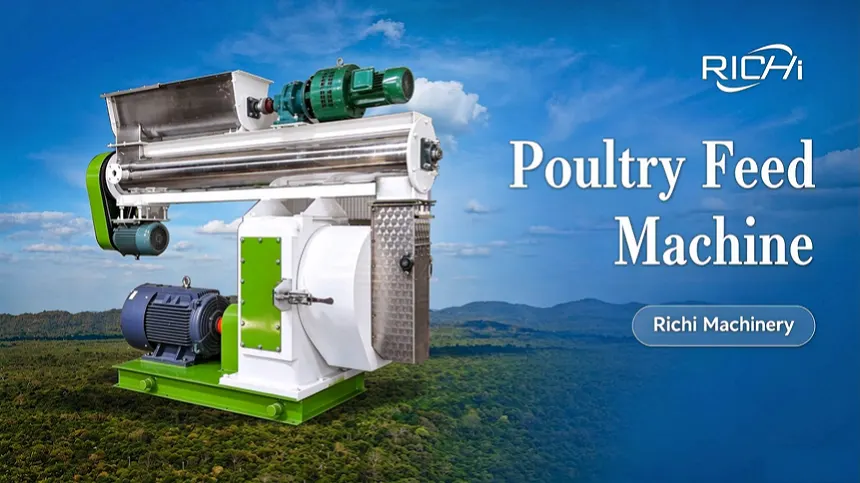
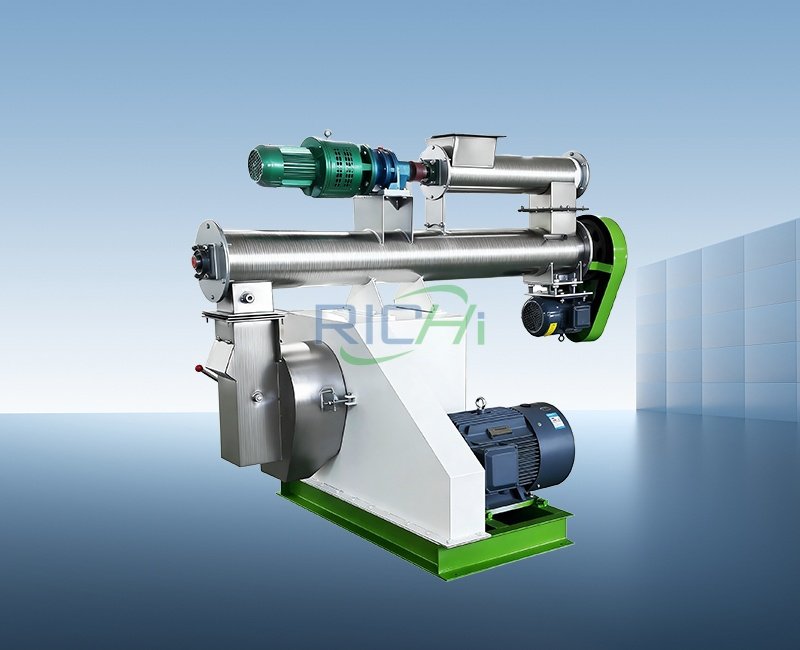
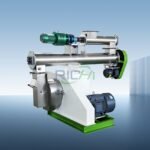
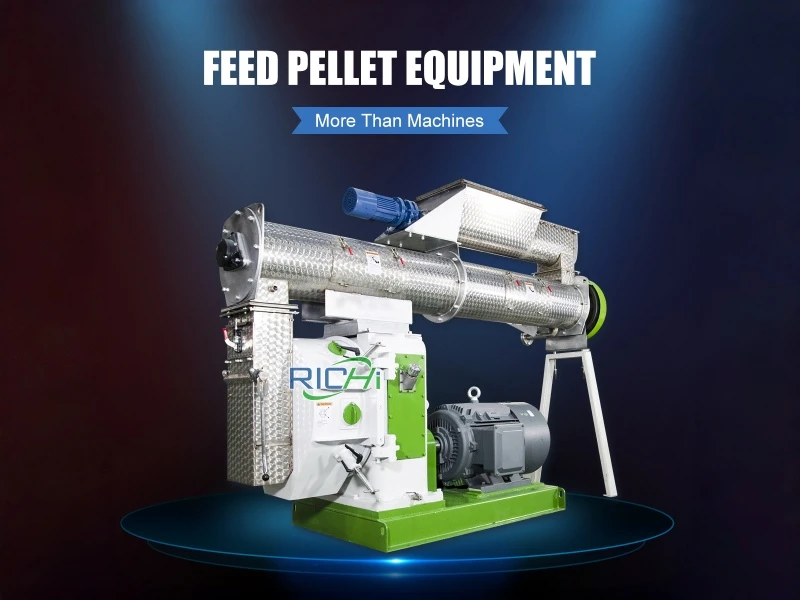
A Feed Granulator Machine may support different pellet sizes through interchangeable dies and adjustable cutting systems.
However, flexibility should not mean attempting to produce every possible feed product on one machine without considering the process requirements.
Some aquatic feeds may require much finer grinding than conventional livestock feed.
Some high-fiber formulas may require different conditioning.
Therefore, flexibility must be engineered.
Matching Capacity With Customer Demand
Capacity planning is one of the most important decisions when building or upgrading a feed factory.
Too little capacity can create production bottlenecks.
Too much capacity can result in expensive equipment sitting idle.
A business should estimate:
- Current daily feed demand.
- Seasonal demand.
- Expected annual growth.
- Number of production shifts.
- Product changeover time.
- Raw material availability.
- Distribution capacity.
For example, a manufacturer targeting a growing regional shrimp market may consider a 0.5-1.0 T/H shrimp feed pellet machine for sale as an entry-level solution before expanding production.
The important point is to connect machine capacity with the commercial strategy.
Why Formula Management Matters
Modern feed manufacturers may need to change formulas frequently.
Different customers may request different protein levels, pellet sizes, ingredients, or functional additives.
Manual formula management becomes difficult as product variety increases.
A centralized batching and control system can help manage multiple recipes.
It can also improve traceability.
When a customer reports a quality issue, production records can help identify the relevant batch and processing conditions.
Raw Material Variability Is Unavoidable
Agricultural materials change with seasons.
Moisture can fluctuate.
Protein content can vary.
Particle size can change.
By-products may have inconsistent physical characteristics.
A robust feed plant should be designed to handle reasonable variations.
This means operators should monitor raw material quality instead of relying on fixed production settings.
Why Grinding Strategy Should Be Flexible
Different feed products may require different grinding fineness.
Livestock feed often uses a different particle size from shrimp feed.
A multi-product plant may therefore require multiple grinding configurations or an adjustable grinding process.
Fine grinding can improve the formation of small aquatic feed pellets, but it may also increase energy consumption.
The best strategy is to grind according to the final product.
Mixing Consistency Supports Product Quality
Once ingredients are prepared, they need to be mixed uniformly.
This becomes increasingly important when the formula includes small amounts of additives.
A good mixing process should achieve uniform distribution without unnecessarily extending mixing time.
The objective is repeatability.
Every batch should be as close as practical to the approved formulation.
Conditioning Should Be Product-Specific
Different feed formulas can require different conditioning settings.
A high-fiber goat feed may behave differently from a protein-rich shrimp formula.
A flexible production line should allow operators to adjust parameters according to the product.
This may include steam flow, retention time, moisture, and feed rate.
The operator should also monitor the material after conditioning.
Pellet Quality Is a Chain Result
It is tempting to blame the pellet mill when pellets are poor.
But pellet quality can be affected by every stage before and after the machine.
If the grinder produces uneven material, pellet quality may suffer.
If the mixer creates poor distribution, nutritional consistency may decline.
If conditioning is unstable, pellet durability may change.
If cooling is inadequate, storage quality may decrease.
If screening is poor, the final product may contain excessive fines.
Therefore, quality control must cover the entire production line.
The Role of the Pellet Plant
A modern pellet plant should be considered as an integrated processing system.
It is not simply a collection of machines.
The relationship between equipment is important.
Material should move efficiently from one stage to the next.
Conveying systems should minimize blockages.
Storage bins should match production requirements.
The electrical control system should coordinate the major machines.
Packaging should keep pace with production.
This integrated approach can improve operational efficiency.
Automation and Data
Data is becoming increasingly useful in feed manufacturing.
Production managers can monitor:
- Hourly output.
- Electricity consumption.
- Material flow.
- Equipment operating status.
- Pellet temperature.
- Moisture.
- Packaging weight.
- Production downtime.
These indicators can reveal problems before they become major failures.
For example, a gradual reduction in production output may indicate wear in a die, roller, feeder, or upstream grinder.
Early detection can reduce downtime.
Maintenance Should Be Planned
Preventive maintenance is usually more efficient than emergency repair.
Operators should establish inspection schedules for:
- Dies
- Rollers
- Bearings
- Motors
- Feeders
- Conditioners
- Conveyors
- Coolers
- Screens
Wear parts should be monitored and replaced before they cause serious production problems.
Maintenance records can also help estimate the actual operating cost of the plant.
When Should a Factory Upgrade?
A plant may need an upgrade when:
- Demand consistently exceeds production capacity.
- Labor costs become too high.
- Product changeovers take too long.
- Energy consumption increases.
- Equipment downtime becomes frequent.
- Customers request new feed types.
- Packaging cannot keep up with production.
An upgrade does not necessarily mean replacing the entire factory.
Adding a new grinder, mixer, pellet mill, cooler, storage bin, or packaging machine may be enough.
Selecting a Technology Supplier
The supplier should be able to discuss the entire process.
Buyers should ask about:
- Equipment configuration.
- Capacity testing.
- Spare parts.
- Installation.
- Commissioning.
- Operator training.
- Electrical requirements.
- Future expansion.
- After-sales service.
A company such as Richi Pellet Mill can be included in the comparison process, but the final equipment decision should be based on the specific feed formula and production objectives.
Research Before Expanding
Before investing in new equipment, manufacturers should collect information from several sources.
Compare equipment configurations.
Study similar feed factories.
Review raw material characteristics.
Calculate production costs.
Estimate future demand.
Evaluate the expected return on investment.
For additional industry references, about this information can help manufacturers understand how feed processing systems are structured.
Building for the Next Five Years
A successful feed plant should not only solve today’s production problems.
It should also create a path for future development.
This means leaving sufficient space for additional equipment, planning appropriate electrical capacity, selecting scalable conveying systems, and considering future product diversification.
A modular approach can make expansion easier and less disruptive.
Final Perspective
The future of feed manufacturing will likely belong to businesses that can combine efficiency with flexibility.
Customers want consistent feed.
Farmers want reasonable prices.
Manufacturers need stable production.
Aquaculture businesses need specialized products.
All of these demands place pressure on the production system.
The answer is not necessarily a bigger factory.
It is a better-designed factory.
A properly planned pellet mill for sale should be evaluated as part of a complete production strategy that includes raw materials, formulation, grinding, mixing, conditioning, pelletizing, cooling, screening, packaging, and future expansion.
When each stage is designed around the final product and business model, a feed factory becomes more adaptable, more efficient, and better prepared for changing market conditions.