


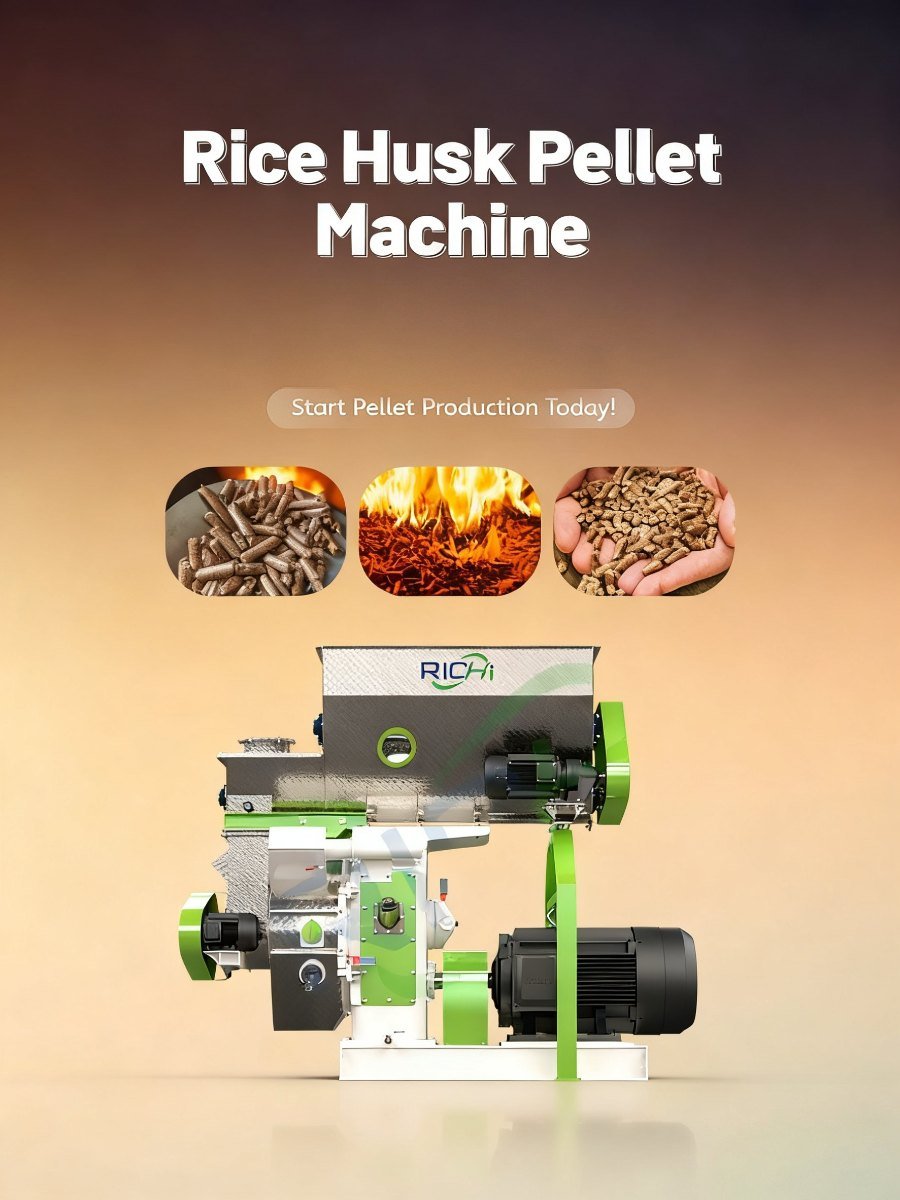
Introduction to Rice Husk Pellet Production
Agricultural industries generate large amounts of biomass residues every year, including rice husk, peanut shells, straw, and other organic materials. Without proper utilization, these resources may create storage challenges and environmental concerns.
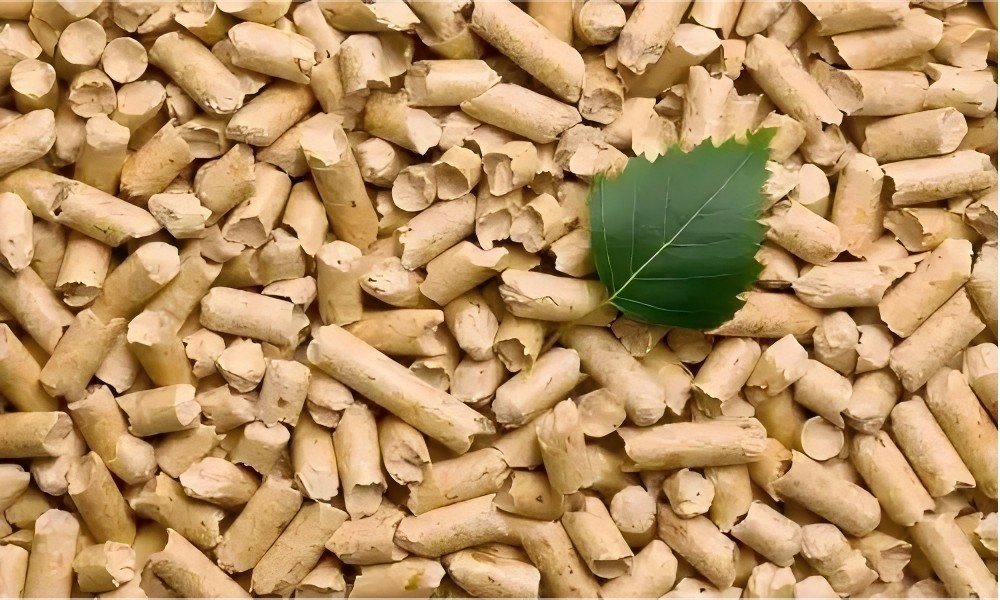
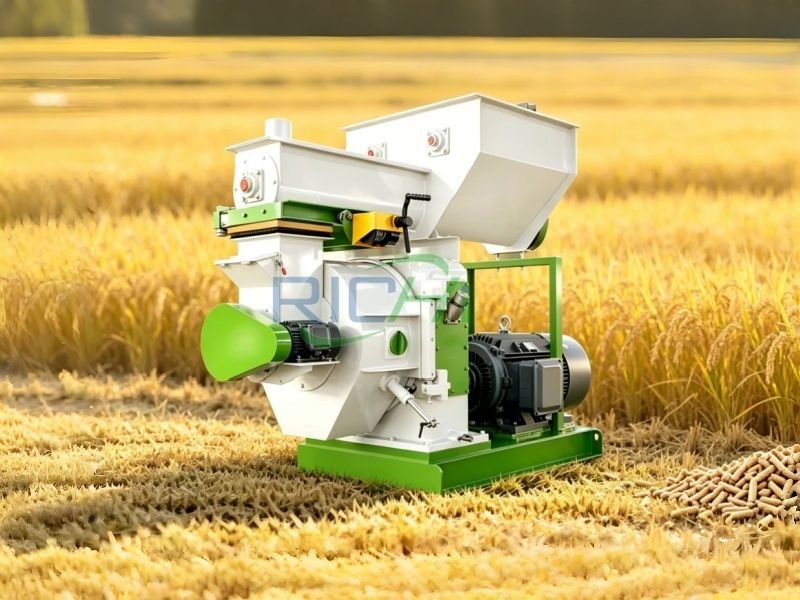
A professional rice husk pellet machine provides an effective solution for converting agricultural waste into high-density pellets. Through advanced compression technology, loose biomass materials can be transformed into compact pellets with improved storage performance, transportation efficiency, and commercial value.
Rice husk pellets are widely used in biomass fuel applications because rice husk is abundant, renewable, and available in many agricultural regions. Modern pellet equipment allows businesses to process these materials efficiently while supporting sustainable resource utilization.
The Importance of Rice Husk Pellet Machines
Turning Agricultural Waste Into Valuable Products
Rice husk is a common by-product of rice milling. Traditionally, large quantities of husk may be burned inefficiently or discarded, leading to resource waste.
Using pelletizing technology, rice husk can be converted into useful biomass pellets with improved characteristics:
- Higher density
- Easier transportation
- Better storage capability
- More convenient handling
This transformation helps agricultural businesses create additional value from existing resources.
Improving Biomass Processing Efficiency
Raw rice husk has a loose structure and relatively low density, making transportation and storage difficult.
A professional pellet machine compresses rice husk particles under high pressure, improving material density and producing standardized pellets suitable for industrial applications.
Efficient processing helps businesses reduce logistics costs and improve overall production efficiency.
How Rice Husk Pellet Machines Work
Raw Material Preparation
Before pellet production, rice husk requires proper preparation. The process usually includes:
- Cleaning impurities
- Adjusting moisture content
- Crushing or grinding
- Material conditioning
Proper preparation improves pellet quality and ensures smoother machine operation.
Pellet Formation Process
During pelletizing, prepared rice husk enters the compression chamber. Rollers apply mechanical pressure to force the material through die holes, creating dense cylindrical pellets.
The compression process improves pellet durability and creates products that are easier to store and transport.
Cooling and Screening
Freshly produced pellets require cooling to stabilize temperature and moisture content.
Screening equipment removes broken particles and ensures consistent pellet size before packaging or delivery.
Advantages of Rice Husk Pellet Production
Sustainable Resource Utilization
Rice husk is a renewable agricultural resource. Converting it into pellets helps reduce waste and supports cleaner production methods.
Businesses can improve resource efficiency while developing new biomass product opportunities.
Lower Storage and Transportation Costs
Compared with loose rice husk, pellets have much higher density.
This allows companies to:
- Reduce storage space requirements
- Improve transportation efficiency
- Simplify handling processes
These advantages make biomass pellets more competitive in commercial markets.
Wide Range of Applications
Rice husk pellets can be used in various fields, including:
- Industrial heating systems
- Biomass boilers
- Renewable energy production
- Agricultural energy applications
Peanut Shell Pellet Machine Applications
Utilizing Peanut Shell Resources
Peanut shells are another valuable agricultural residue with good biomass potential. Similar to rice husk, peanut shells can be processed into pellets for energy and industrial applications.
A peanut shell pellet machine for sale provides businesses with an opportunity to process available agricultural waste into high-value biomass products.
Benefits of Peanut Shell Pellet Production
Peanut shell pellet production offers several advantages:
- Reduced agricultural waste
- Improved material utilization
- Lower transportation difficulty
- Additional income opportunities
By using suitable pellet equipment, agricultural enterprises can create sustainable production models.
Factors to Consider When Selecting Biomass Pellet Equipment
Raw Material Characteristics
Different biomass materials have different processing requirements. Before purchasing equipment, businesses should evaluate:
- Moisture content
- Particle size
- Fiber characteristics
- Material availability
Proper analysis helps determine the most suitable equipment configuration.
Production Capacity Requirements
Production scale directly affects machine selection.
Small businesses may need compact equipment for local processing, while industrial biomass projects require high-capacity systems for continuous operation.
Choosing the correct capacity improves efficiency and reduces unnecessary investment.
Equipment Quality and Service
Reliable equipment is essential for long-term production. Buyers should consider:
- Machine durability
- Energy consumption
- Maintenance requirements
- Technical support
Professional suppliers can provide customized solutions according to raw materials and production goals.
Businesses interested in learning more about biomass processing technology and pellet production solutions can visit this important site for additional information.
When selecting a suitable pellet machine, companies should evaluate production efficiency, equipment stability, operating costs, and long-term benefits.
Building an Efficient Biomass Pellet Production System
Complete Production Process
A professional biomass pellet production system may include:
- Raw material collection
- Crushing and preparation
- Drying process
- Pelletizing
- Cooling
- Screening
- Packaging
Integrating these processes helps achieve stable production and consistent product quality.
Customized Solutions for Different Materials
Rice husk, peanut shells, and other biomass materials have unique characteristics.
Professional equipment suppliers can design suitable solutions based on:
- Material properties
- Required output
- Final application
- Factory conditions
Customized systems improve production performance and profitability.
Future Development of Biomass Pellet Technology
The future of biomass pellet production will focus on automation, intelligent control, and energy-efficient operation.
Advanced pellet systems will help businesses optimize production processes, reduce energy consumption, and improve product consistency.
As industries continue searching for renewable resources, agricultural waste pellet technology will become increasingly important. Efficient biomass pellet machines will help transform waste materials into valuable products while supporting sustainable development.
Conclusion
A rice husk pellet machine provides an efficient way to convert agricultural residues into valuable biomass pellets. By improving material density, storage efficiency, and transportation performance, businesses can maximize the potential of renewable resources.
Combined with peanut shell processing solutions and advanced pellet machine technology, agricultural enterprises can establish sustainable production systems that reduce waste and create new market opportunities. With the continued growth of biomass utilization, pellet production will play an increasingly important role in modern resource management.
View details: https://www.richimanufacture.com/rice-husk-pellet-machine/