

Feed mills rarely enjoy perfect consistency. Corn arrives with different moisture levels. Soybean meal varies in protein content. By-product availability changes with the season. A formula that works well in one month may perform poorly in the next, not because the design was wrong, but because the inputs changed.
Managing that variability is one of the hardest parts of feed production. It affects cost, feed quality, bird performance, and ultimately the farm’s bottom line. Mills that handle it well stay profitable. Mills that ignore it spend their time firefighting.
This article looks at how poultry feed mills deal with raw material changes. It covers formula design, testing, process adjustment, storage, and the practical decisions that keep production stable when inputs are not.
Why Raw Material Variability Is a Real Problem
It is tempting to treat feed formulation as a fixed recipe. In practice, no two batches of raw material are identical. Energy content, protein level, moisture, fiber, and digestibility all shift. If the mill does not adjust, the finished feed drifts away from the target nutrient profile.
The consequences show up in different ways. Birds may grow more slowly. Egg production may drop. Feed conversion may worsen. In severe cases, deficiencies or excesses cause health problems. None of these are obvious at the moment of mixing. They appear weeks later, when the cause is hard to trace.
Cost is the other side. If the mill over-formulates to be safe, it wastes money on expensive ingredients. If it under-formulates to save money, it risks performance. The goal is to hit the target consistently, not to aim high or low.
Start With Ingredient Testing
The first defense against variability is testing. Mills that test incoming ingredients know what they are working with before the formula is set.
Common tests include:
- Moisture. High moisture dilutes nutrients and increases mold risk. Low moisture can cause handling and pelleting problems.
- Protein. Crude protein is the most common measure, though amino acid profiles matter more for precise formulation.
- Fat and energy. Energy density drives feed conversion and formula cost.
- Fiber. Fiber affects digestibility and gut health.
- Ash and minerals. These indicate bone content in meat meals or contamination in plant proteins.
- Mycotoxins. A serious risk in grain, especially in humid regions.
Not every mill can run a full laboratory. Smaller mills often rely on external labs or on rapid tests for moisture and protein. Even basic testing is far better than none. A mill that knows the moisture of its corn can adjust the formula before the batch is mixed, not after the birds underperform.
Adjusting the Formula, Not Just the Ingredients
Once ingredient quality is known, the formula has to be adjusted. This is where least-cost formulation software earns its place. The software takes nutrient targets and available ingredients, then calculates the cheapest combination that meets those targets.
But software is only as good as the data and the targets. If the nutrient values in the database do not match the actual ingredients, the formula will be wrong. If the targets are set too loosely, performance suffers. If they are set too tightly, cost rises unnecessarily.
Good mills review their targets regularly. They adjust for bird age, production stage, climate, and health status. They also keep an eye on ingredient prices. When soybean meal is expensive, they may shift toward alternative proteins. When corn is cheap, they may increase energy density. The formula is not fixed; it responds to the market and the birds.
The Role of the Feed Production Line
Formula changes have process implications. A formula with more fat may need different conditioning. A formula with more fiber may flow differently through the mill. A formula with higher moisture may need more drying or cooling. The production line has to be flexible enough to handle these changes.
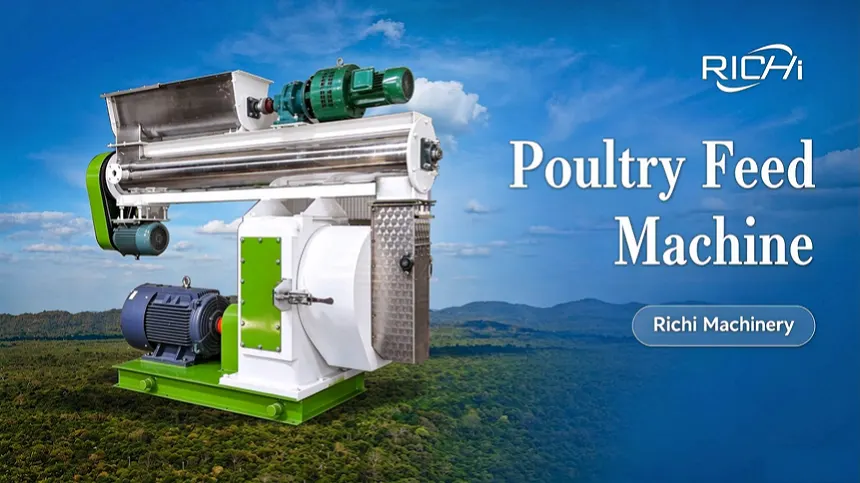
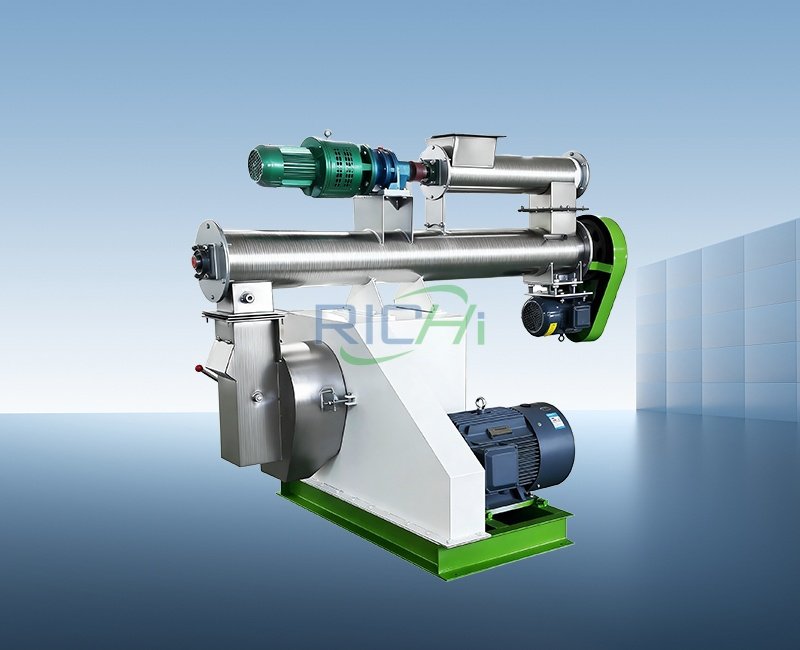
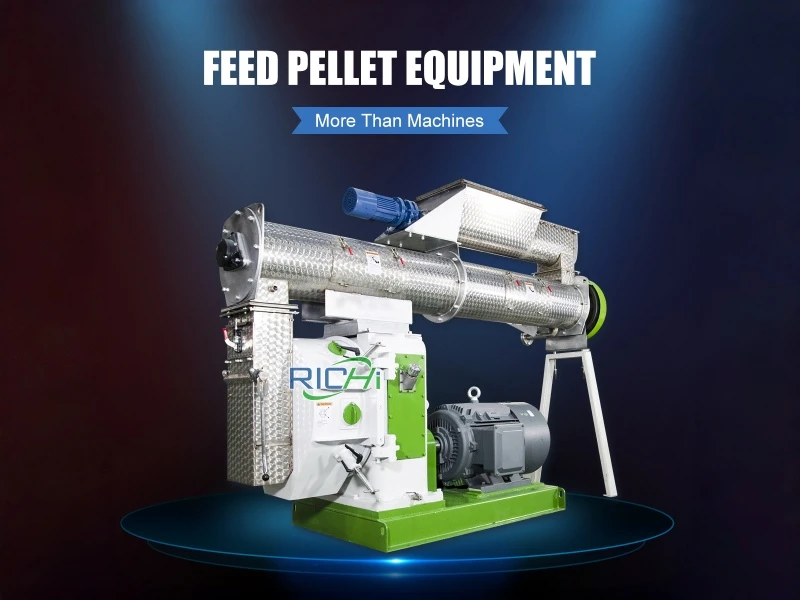
This is where equipment selection matters. A hammer mill with adjustable screens handles a wider range of particle sizes. A mixer with good uniformity handles small inclusion rates better. A pellet mill with adjustable die and roller settings handles different formulas more easily. A poultry feed making machine that is designed for flexibility will handle formula changes better than one built for a single recipe.
The point is not to buy the most expensive line. It is to buy a line that matches the range of formulas the mill expects to produce. A mill that only ever makes one formula can use simpler equipment. A mill that serves different bird types, different farms, and different seasons needs more flexibility.
Managing Moisture Through the Process
Moisture is the most common source of trouble in feed production. It affects storage, grinding, mixing, pelleting, and cooling. Mills that control moisture well avoid many problems.
Incoming grain should be dried to a safe storage level. If it is too wet, it will mold. If it is too dry, it may crack and create fines. The target range depends on the grain and the climate, but it is usually between 12 and 14 percent for safe storage.
During grinding, moisture affects how the material flows and how much dust is created. During mixing, moisture affects uniformity. During pelleting, moisture and heat work together to gelatinize starch and bind the pellet. Too little moisture causes poor pellet quality. Too much causes soft pellets and mold risk.
After pelleting, cooling brings moisture down and stabilizes the pellet. A cooler that is undersized or poorly adjusted leaves hot, moist pellets that spoil in storage. This is a common problem in small mills that add pelleting without upgrading cooling.
Storage and Inventory Management
Raw material variability is not only about quality. It is also about availability. Mills that run out of a key ingredient mid-batch either stop production or substitute something else, which changes the formula.
Good inventory management means:
- Tracking usage rates for each ingredient
- Keeping safety stock for critical ingredients
- Rotating stock to avoid spoilage
- Monitoring storage conditions
- Planning purchases around seasonal availability
For mills in regions with harvest seasons, buying and storing grain at harvest can reduce cost significantly. But storage has its own risks. Grain that is stored too long or in poor conditions loses quality. The mill has to balance cost savings against quality risk.
Working With Suppliers
Raw material quality starts with suppliers. A mill that buys from many small suppliers gets more variability than one that buys from a few reliable sources. But relying on a single supplier creates risk if that supplier has problems.
The practical approach is to build relationships with a few trusted suppliers, test every delivery, and keep alternatives available. Contracts can help stabilize price and quality, but they also reduce flexibility. The right balance depends on the mill’s size and market.
Communication matters too. If a supplier knows what the mill needs, they can sometimes sort or blend material to meet those needs. If the mill never communicates, it gets whatever is available.
Quality Control at the Finished Feed Stage
Adjusting for raw material variability does not end when the batch is mixed. Finished feed should be checked before it leaves the mill.
Common checks include:
- Nutrient content. Protein, fat, and moisture are the basics.
- Particle size. Consistency affects consumption and digestion.
- Pellet durability. Pellets that crumble in handling create waste.
- Uniformity. Color, texture, and ingredient distribution should be consistent.
- Temperature and moisture. Especially important for pelleted feed.
Mills that track these values over time can spot trends before they become problems. A gradual rise in moisture, for example, may signal a storage issue. A drop in pellet durability may signal a die wear problem. Data is what turns quality control from a guess into a system.
The Cost of Getting It Wrong
The financial impact of poor raw material management is easy to underestimate. It shows up in several places:
- Wasted ingredients. Over-formulation or spoilage wastes money.
- Poor feed conversion. Birds need more feed to reach the same weight.
- Reduced production. Layers produce fewer eggs, broilers grow slower.
- Health costs. Deficiencies and mycotoxins increase veterinary costs.
- Customer loss. Farms that receive inconsistent feed switch suppliers.
For a commercial mill, these costs add up quickly. For a farm making its own feed, they directly affect profitability. Either way, the investment in testing, formulation, and process control usually pays back faster than expected.
When to Bring in Outside Expertise
Some mills handle raw material variability with internal staff and basic equipment. Others need more support, especially when scaling up or when entering new markets.
Outside expertise helps most in a few situations:
- Designing a new production line
- Moving from mash to pellets
- Expanding capacity
- Entering export markets with strict quality requirements
- Dealing with a persistent quality problem
A supplier that understands both equipment and process can often solve problems faster than a mill working alone. This is especially true when the issue involves the interaction between formula, equipment, and operating conditions.
For mills that want a complete solution rather than piecemeal equipment, straight from the source information on turnkey services is worth reviewing. It covers project design, equipment supply, installation, and commissioning in one place.
Planning for Scale and Flexibility
Mills that expect to grow should plan for flexibility from the start. A line designed for one formula and one capacity will be hard to adapt later. A line designed with room for adjustment handles change more gracefully.
Flexibility can mean:
- Adjustable grinding screens
- Variable mixing times
- Adjustable pellet mill settings
- Modular layout for future expansion
- Adequate power and storage capacity
The cost of flexibility is usually small compared to the cost of rebuilding. Mills that plan ahead avoid the trap of buying equipment twice.
For mills considering a range of capacities, a 1-40t/h poultry feed manufacturing machine for sale covers a wide span, from small farm operations to commercial plants. Matching the right capacity to the actual demand is the key decision, not simply choosing the largest available option.
Conclusion
Raw material variability is not a problem to solve once. It is a condition to manage continuously. Mills that test ingredients, adjust formulas, control moisture, manage storage, and track finished feed quality stay ahead of it. Mills that treat feed production as a fixed recipe fall behind.
The equipment matters, but it is part of a larger system. Formula design, process control, and supplier management all play a role. When these pieces work together, the mill produces consistent feed at a controlled cost, regardless of what the raw materials throw at it.
For mills that want a partner across the whole process, Richi Pellet Machine provides equipment and project support for poultry feed production, from single machines to complete lines.