




A wood pellet press commissioning record should explain more than whether the machine made pellets on its first day. Buyers need to know which raw material, utility conditions, settings, and operating practices produced an acceptable result, and whether their own team can repeat that result. Without this evidence, a successful demonstration can become a fragile production arrangement that depends on one technician remembering undocumented adjustments. The useful deliverable is an operating window supported by measurements, sample identification, and clearly assigned actions. This guide explains how to build that record without confusing an isolated capacity reading with sustained commercial readiness.
Define the Record Before Material Enters the Press
Start with a commissioning sheet that identifies the machine, die, roller arrangement, feedstock specification, and test objective. Record the document revision, people responsible for measurements, and instruments used. Agree which observations are informational and which determine acceptance. A buyer might require consistent screened product, stable machine loading, and repeatable startup behavior, but the actual limits must come from the purchase agreement, product specification, and equipment instructions. Writing them down before the run prevents the team from quietly changing the acceptance standard after seeing disappointing results.
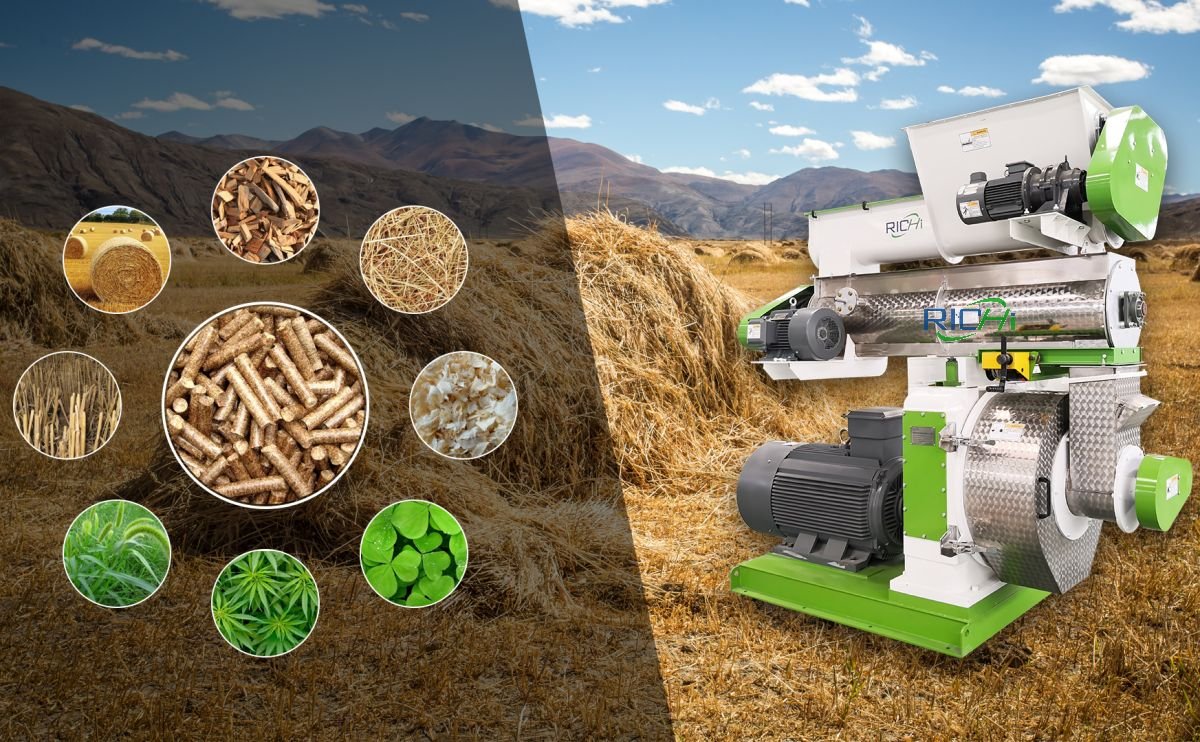
Separate commissioning observations from contractual conclusions. A result obtained with a specially prepared material batch may establish that the press functions, while leaving normal feedstock variability untested. Label that limitation rather than describing the machine as fully accepted. When discussing the selected equipment with RICHI Machinery, buyers can use the wood pellet machine process configuration as the equipment reference, then request records tied to the actual installed press and surrounding line. A product description is useful context; it does not replace a site-specific acceptance record.
Give Every Feedstock Batch a Traceable Identity
Wood feedstock is not one uniform input. Species mix, particle distribution, moisture, storage history, and contamination can change how material feeds and compacts. Assign each test batch a reference that connects the delivery, preparation steps, and samples taken during the run. Describe where moisture samples were collected and how the measurement was made. If the batch was blended, document the blend rather than using a broad label such as mixed sawdust. Retain representative samples when practical and permitted by the plant’s sampling procedure.
Record changes during the shift as separate events. A new truck delivery, an altered dryer setting, or a different screen can move the process into a different condition even if the press settings stay unchanged. Do not average all these conditions into one unexplained performance number. The commissioning record should let a reviewer separate equipment behavior from changes in material preparation. This traceability also supports later discussions with raw-material suppliers when a production deviation appears after the equipment contractor has left the site.
Establish a Measurement Boundary for the Whole Line
Decide where each measurement starts and ends. Press motor demand, total line electricity, dryer energy, and packing output describe different boundaries and should remain distinct. Identify the scales or weighing method used for input and accepted output. State whether throughput includes screened fines, material returned to the process, or product awaiting quality approval. A mass balance that treats recirculated material as new production can overstate commercial output and hide the workload imposed by poor product quality.
Synchronize the timestamps used by operators, electricians, and quality staff. The team should be able to connect a change in feeder setting with a later product sample and the corresponding machine load. Exact laboratory precision is not necessary for every operating observation, but the record must be internally consistent. If an instrument is unavailable or a reading is estimated, mark that fact. Missing measurements are gaps to close, not opportunities to create plausible numbers. Document the conditions needed to repeat the test using the buyer’s normal measurement resources.
Change One Controllable Variable at a Time
A productive commissioning trial has a planned sequence. Begin from a condition authorized by the equipment supplier and the site’s operating procedure, then make controlled changes within approved limits. Record the reason for each change, the previous and new settings, the time, and the response. Changing feed rate, raw-material moisture, and die-related conditions together may produce a better result, but it makes the cause of that improvement difficult to identify. Where multiple changes are unavoidable, state that the evidence cannot isolate their individual effects.
Allow the process to settle before labeling the next observation as a steady condition. The appropriate settling period depends on material travel, equipment response, and the line arrangement; it should not be borrowed blindly from another plant. Include transient periods in the event log but keep them separate from the accepted measurement interval. Operators should follow manufacturer instructions and site safety controls throughout the trial. Commissioning is not an authorization to defeat guards, bypass trips, or inspect moving components to obtain a better measurement.
Connect Product Samples to Operating Conditions
Give each product sample a timestamp and a location. Pellets taken directly after the press can behave differently from cooled and screened pellets ready for storage. Record the cooling and screening conditions associated with the sample, along with the approved product tests. Buyers should distinguish appearance checks from measured durability, moisture, dimensions, or other contractual criteria. A photograph may help describe an observation, but it cannot independently demonstrate a numerical product requirement.
Document handling effects as well as press output. If pellets look acceptable at the cooler outlet but produce substantial fines during transfer, the operating window is not yet a complete commercial baseline. Describe the transfer route and sample again at a relevant downstream point. Keep rejected material and rework visible in the record. When a product issue appears, link it to the corresponding material batch and operating interval so the team can test a specific explanation rather than changing settings in response to an unidentified bag of poor pellets.
Build an Operating Window Instead of a Single Best Point
The best short interval is rarely the most useful handover condition. Identify a range where machine loading, material flow, product quality, and downstream equipment remain acceptable together. Describe the tested boundaries and the warning signs observed near them. The record might show that one condition offered greater gross throughput while another produced more accepted product with fewer interruptions. That distinction helps procurement and production staff assess the result using the same commercial definition.
Avoid presenting untested boundaries as proven limits. If only one moisture condition was evaluated, record the baseline as valid for that tested condition and leave the wider range unresolved. Classify each conclusion as demonstrated, provisionally supported, or requiring a further trial. This approach makes the commissioning report more useful than a simple pass mark because it tells future operators what they can rely on and what still needs caution. It also prevents a vendor or buyer from treating ordinary process variability as evidence of a guarantee that was never established.
Record Interruptions and Corrective Actions Honestly
Keep a chronological interruption log covering feed shortages, overload events, blockages, utility disturbances, quality holds, and planned checks. Use the plant’s agreed definitions to distinguish equipment faults from external interruptions. Record the duration, immediate action, responsible person, and evidence needed to close the issue. A run described as continuous should not quietly exclude every inconvenient stoppage from the test interval. Where the acceptance agreement allows specific exclusions, identify them explicitly and retain the original event history.
Corrective actions should have an owner and a verification method. Changing a component, adjusting a preparation step, or improving an operator instruction is not closed merely because somebody reports doing it. Repeat the relevant observation under controlled conditions and record the outcome. If the problem cannot be reproduced, retain that uncertainty. The purpose of the log is not to allocate blame; it is to preserve the sequence that explains why the final configuration differs from the first-start configuration and whether the change actually improved repeatability.
Prove Repeatability With the Buyer’s Operating Team
Ask the receiving team to reproduce the accepted condition using the approved startup instructions and the same defined feedstock class. The test should demonstrate that settings, sampling points, and response actions are understandable without relying on informal coaching from the commissioning engineer. Include a controlled stop and restart when the supplier and site procedure permit it. Compare the resulting product and operating observations with the baseline rather than assuming that a successful restart automatically proves equivalent performance.
Use this exercise to identify missing instructions. Operators may understand the target feeder setting but not the material conditions needed to make it meaningful. Maintenance staff may need clearer die identification or inspection criteria. Quality staff may need the timing that connects a sample to a specific operating interval. Capture these gaps as document changes or training actions. A repeatability check is valuable precisely because it tests the transfer of knowledge, not simply the mechanical capability already observed during the first supervised run.
Hand Over a Record That Can Be Used Months Later
The final package should include the accepted configuration, sample references, instrument list, event log, unresolved limits, approved instructions, and action register. Give every attachment a clear identity and retain the original data alongside the summary. A later reader should understand why the operating window was selected and which evidence supports it. If a spreadsheet calculates averages or rates, document its formulas and treatment of rejected product so the same calculation can be reproduced after personnel changes.
An effective commissioning record becomes a practical troubleshooting reference. When raw material, product quality, or operating cost changes, the buyer can compare the new condition with a documented baseline and narrow the investigation. This is a stronger handover outcome than a memorable first-start demonstration. It gives the plant a defensible operating window, makes unresolved issues visible, and supports measured improvement without losing the conditions that originally produced reliable output.
